
You have heard it a hundred times. Anxious? Grab an indica. Stressed out of your mind? Indica. Can't turn your brain off at night? You guessed it, indica. It is the internet's default answer to basically every "I need to calm the f*@k down" problem, and honestly, it is not totally wrong. It is just not the whole story, and the missing pieces are the difference between actually feeling better and accidentally sending yourself into a spiral.
Here is the short version, because we are not going to make you scroll for it. Indica-labeled products are often associated with relaxation, and plenty of people do feel calmer using them. But the "indica equals calm" rule is way shakier than the dispensary shelf makes it look, and the thing that actually decides whether cannabis chills you out or cranks up your anxiety is not the strain label at all. It is the dose, the chemistry, and how you take it. That is the part nobody tells you, and it is exactly the part we build our entire brand around.
So let's get into it. What indica really means, why the label is only half the equation, what the science actually says about THC and anxiety, and how to use all of that to feel calm without accidentally feeling worse.
What Does Indica Actually Mean?
Cannabis got split into two buckets centuries ago based purely on how the plants looked. Cannabis indica plants were the short, bushy, broad-leafed ones. Cannabis sativa plants were tall and narrow-leafed. Those were botanical descriptions of plant shape and where the plant came from, not descriptions of how the plant made anyone feel. Somewhere along the way the weed world flipped that into a mood chart: indica for "in-da-couch" relaxation, sativa for daytime energy, hybrid for somewhere in between.
It is a catchy system. It is also a marketing shorthand that has drifted pretty far from the actual chemistry. Modern cannabis has been crossbred so many times that almost everything on the market is a hybrid of a hybrid of a hybrid, and the "indica" on the jar is often more of a vibe than a verified fact. That does not mean the label is useless as a rough starting point, but it does mean you should not bet your peace of mind on it alone.
Is There Really a Difference Between Indica and Sativa?
Here is where it gets spicy. When researchers actually put cannabis under the microscope, the clean indica-versus-sativa split mostly falls apart. In one of the largest analyses ever done, scientists examined 89,923 samples from six US states with complete cannabinoid and terpene data and found that products labeled indica, sativa, and hybrid were chemically intermingled with no obvious segregation, concluding that commercial labels do not consistently align with the observed chemical diversity. Translation: two "indicas" from two different shelves can be chemically nothing alike, and an "indica" and a "sativa" can be near twins under the hood.
So if the label is not driving the effect, what is? The answer is the actual chemistry of the product, mainly the cannabinoids like THC and the aromatic compounds called terpenes. That same body of research points out that terpenes are the primary driver of effects, with myrcene associated with sedation, limonene with more uplifting effects, and pinene with focus. The sleepy, heavy feeling people credit to "indica genetics" is more accurately tied to specific terpenes than to the plant's leaf shape.
This is a big deal for anyone reaching for indica specifically to manage anxiety, because it means picking by label alone is basically a coin flip. You are trusting a word on a package to predict something the word was never actually measuring.
Does Indica Help With Anxiety, Or Not?
Real talk: indica can absolutely help with anxiety for a lot of people. The relaxation, the body-heavy calm, the "my shoulders finally dropped" feeling, that is real, and it is a legitimate reason people gravitate toward indica-leaning products when they are wound up. We are not here to tell you your experience is fake.
But whether cannabis helps your anxiety or feeds it comes down to something way more important than the strain family, and that is how much THC you take. This is the single most overlooked factor in the entire "does indica help with anxiety" conversation, and it is the thing that quietly decides whether you end up relaxed or paranoid.
How Does THC Affect Anxiety?
THC has what scientists call a biphasic effect, which is a fancy way of saying it does opposite things at low doses versus high doses. At a low dose it tends to calm you down. Push past your personal threshold and it can flip on you, ramping up anxiety and paranoia instead of dialing it down. It is the same "too much of a good thing" curve you already know from caffeine, where one coffee makes you sharp and four make you jittery and anxious.
This is not vibes, it is measured. In a controlled study, 42 patients were given either a placebo or a low (7.5 mg) or high (12.5 mg) dose of THC and then put through stress-inducing tests, and those who took the low dose reported lower anxiety than the placebo group, while those who took the high dose experienced an increased anxiety response. Same drug. Same people. Opposite outcomes. The only thing that changed was the amount.
That single finding rewrites the whole question. It is not really "does indica help with anxiety." It is "did you take a small enough dose for THC to work with you instead of against you." A high-dose "relaxing indica" gummy can still send an anxious person into a tailspin, and a low, controlled dose of THC can take the edge off no matter what the label says. If you want the deeper dive on this exact relationship, we broke it all the way down in our guide to whether THC actually helps with anxiety and what the research says.
Why the Dose Matters More Than the Strain
Because THC flips from calming to anxiety-inducing once you cross your personal line, the amount you take is doing more heavy lifting than the indica or sativa label ever could. A "chill indica" edible packed with 25mg or 50mg of THC is not a calm product, it is a strong product, and strong is exactly what tips anxious people over the edge.
This is the entire reason microdosing exists, and it is the whole philosophy behind everything we make. Instead of chasing a big heavy high and hoping it lands as "relaxed" instead of "why is my heart racing," you take a small, predictable amount that keeps you in the calm zone of that biphasic curve on purpose. Low and controlled is not the boring option here. It is the smart one. If you are newer to this and want to do it right, start with our beginner's guide to safe microdosing practices so you actually stay in the sweet spot instead of blowing past it.
What Actually Makes Cannabis Feel Calming?
If it is not the indica label doing the work, then let's talk about what genuinely moves the needle on relaxation. There are three levers that matter way more than the word on the package: the dose, the terpenes, and what else is in the formula alongside the THC.
Dose we already covered, and it is the big one. Keep it low and you stay in the calming lane. The second lever is terpenes, those aromatic compounds that shape how a given product actually feels. Myrcene leans relaxing, linalool (the same compound that makes lavender calming) leans soothing, and limonene leans mood-lifting. There is even direct clinical support for terpenes doing real work here: a 2024 Johns Hopkins study found that combining THC with the terpene limonene significantly reduced THC-induced anxiety without diminishing the therapeutic effects. That is a terpene actively steering how THC lands, which is exactly the kind of thing the indica label pretends to promise but cannot actually deliver on its own.
The third lever is what you stack with the THC, and this is where we do something different. We do not just toss THC in a gummy and call it "relaxing." We pair it with functional mushrooms and natural ingredients built around a specific outcome, so the calm is intentional instead of accidental.
How MCRO Builds Calm Into the Formula
Our whole thing is Functional THC, which means every product is engineered around a feeling you actually want instead of just "get high and hope for the best." For anxiety and stress specifically, our Calm Down microdose gummies blend a low, controlled dose of Delta-9 THC with 500mg of Reishi mushroom, a functional mushroom long associated with a grounded, calming effect. The point is not to knock you out or check you out. It is clear-headed peace, less tension, and an evened-out mood, without gluing you to the couch or spinning you into anxiety.
That combination is the answer to the whole "does indica help with anxiety" question done properly. Low dose so you stay on the calming side of the biphasic curve. A functional ingredient chosen on purpose to support relaxation. And a predictable, consistent amount every single time so you are never rolling the dice on how strong tonight's gummy happens to be. We remove all the terpenes from our Delta-9 distillate and then build the effect intentionally, so what you get is a targeted, repeatable experience instead of a mystery.
What Should You Actually Look For If You Want Calm?
Forget hunting for the perfect "indica." Here is what actually gets you the relaxed, unwound feeling you are after, in plain terms.
Start with the lowest effective dose and build up slowly. If you are new or anxiety-prone, that means beginning with a small microdose, seeing how it hits, and only nudging it up from there. This is the number one rule because it keeps you on the calming side of THC's curve where it belongs. Next, prioritize products designed for the feeling you want rather than products sorted by a vague strain label, because a formula built for calm will beat a coin-flip "indica" every time. And finally, look for brands that actually tell you what is inside and in what amounts, because you cannot control your dose if you do not know your dose.
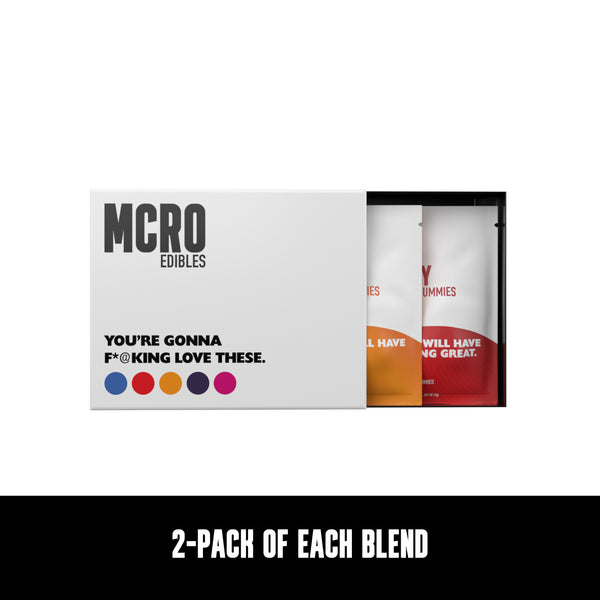
If you want to ease in without committing to a full pack, the MCRO Sample Box lets you try our different microdose formulas and find the one that fits your body and your stress before you go all in. And if your anxiety tends to spike at night and wreck your sleep, our At Night gummies pair that same low-dose Delta-9 approach with melatonin and functional mushrooms to help you actually wind down. Feeling calm is not about finding a magic strain. It is about taking the right amount of the right formula, and that is the entire reason MCRO exists.
The bottom line is this. Indica can help with anxiety, but not because of the label, and not for everyone. What actually helps is a low, controlled dose of THC, supportive ingredients like functional mushrooms, and knowing exactly what you are putting in your body. Skip the guessing game. Microdose it, build it into your routine, and let the calm be something you can count on.
Frequently Asked Questions
Does indica help with anxiety?
Indica-labeled products are often associated with relaxation and can help some people with anxiety, but the strain label is not what actually drives the effect. Research shows that indica and sativa labels do not consistently match the real chemical makeup of cannabis, so the calm feeling comes down to the dose of THC, the terpene profile, and the supporting ingredients rather than the "indica" name itself. A low, controlled dose is far more likely to relieve anxiety than a strong one, regardless of the label.
Can THC make anxiety worse?
Yes. THC has a biphasic effect, meaning low doses tend to reduce anxiety while higher doses can increase anxiety and paranoia. In one controlled study, a low 7.5mg dose lowered participants' stress response while a higher 12.5mg dose raised it. This is exactly why microdosing matters. Taking a small, predictable amount keeps you on the calming side of that curve instead of tipping you over into a worse headspace.
What is the best type of THC product for stress and anxiety?
The best product is a low-dose, functional formula designed specifically for calm rather than one picked by strain label alone. MCRO's Calm Down gummies pair a low dose of Delta-9 THC with Reishi mushroom to support a grounded, clear-headed relaxation without couch-lock. Starting low and choosing a product built around the feeling you want gives you a far more reliable result than gambling on a generic "indica."
Is indica or sativa better for relaxation?
Neither label reliably predicts relaxation on its own, because studies of tens of thousands of samples found indica and sativa products to be chemically intermingled. What actually determines whether something feels relaxing is the chemistry, especially terpenes like myrcene and linalool, plus a manageable THC dose. Instead of choosing by label, choose a product formulated for calm and keep your dose low.
How much THC should I take for anxiety?
Start with the lowest amount you can and go slow, since THC's calming benefits show up at low doses and its anxiety-inducing effects show up at higher ones. For many people a microdose in the low single-digit milligrams is the sweet spot. If you are new, try a small dose from a product like the MCRO Sample Box, see how it feels, and only increase gradually from there.
Do functional mushrooms help with anxiety alongside THC?
Functional mushrooms like Reishi are widely used to support a calm, grounded feeling, which is why MCRO builds them directly into formulas like Calm Down alongside a low dose of Delta-9 THC. Pairing a supportive functional ingredient with a controlled THC dose is designed to make the calm intentional and consistent rather than accidental. As always, results vary from person to person.