
You cannot scroll a wellness feed right now without someone swearing that either THC or CBD is the fix for your trash sleep. One camp calls CBD the gentle, non-intoxicating answer. The other says a little THC puts you down for the count. So which one actually works better for sleep? The blunt answer is that they do very different jobs, and for most people chasing real rest, a low dose of THC is the more reliable lights-out, while CBD plays a quieter supporting role.
Sleep is not a small problem, either. The CDC reports that nearly a third of U.S. adults sleep less than the recommended seven hours a night. That is a lot of people staring at the ceiling at 2 a.m., reaching for whatever might help. Before you throw money at a random gummy with a moon printed on the label, here is what the research actually says, minus the marketing fluff.
What Is the Difference Between THC and CBD for Sleep?
THC and CBD are both cannabinoids that come from the hemp plant, and they both talk to your body's endocannabinoid system, the network that helps regulate mood, stress, and yes, sleep. But they are not interchangeable. THC is the intoxicating one, the compound responsible for the classic buzz. CBD is non-intoxicating, so it will not get you high no matter how much you take. That single difference shapes everything about how each one handles bedtime.
How Does THC Affect Sleep?
THC is the heavy hitter when it comes to falling asleep. Research reviews have found that THC can shorten sleep onset latency, which is a fancy way of saying it helps you drift off faster. It also tends to nudge you into deeper, slow-wave sleep, the restorative stage your body craves. This is exactly why so many people reach for THC edibles at night instead of pouring a nightcap.
There is a catch, and it comes down to dose. THC's effect on REM sleep appears to be dose-dependent. A systematic review and meta-analysis found that low nighttime doses, in the range of roughly 2.5 to 15 mg, tend to cause minimal or no REM disruption, while higher doses are more likely to cut into REM and leave you foggy the next day. The translation is simple: more is not better. A precise microdose beats getting blasted every single time. We get into the why in our breakdown of why low-dose THC works better at night than high doses.
How Does CBD Affect Sleep?
CBD is the subtle one. It does not knock you out. Instead, research suggests CBD may help with sleep indirectly by taking the edge off anxiety and stress, the mental noise that keeps a racing brain wide awake. Some early studies point to CBD having therapeutic potential for insomnia, though the evidence is still thin and mixed.
Here is the twist most brands will not tell you. CBD can be biphasic, which means its effect changes with the dose. Lower amounts may actually feel mildly alerting rather than sedating, while higher amounts lean more relaxing, and dose appears to shift how it affects REM sleep. So if you once took a small CBD gummy and felt more wired than sleepy, you were not imagining it. CBD is better understood as a calm-down cannabinoid than a knock-out one.
Which Works Better for Sleep, THC or CBD?
Here is the honest answer nobody selling a single-ingredient product wants to give you: it depends on why you are not sleeping. If your problem is that you physically cannot wind down and shut your brain the f*@k off, low-dose THC is usually the more reliable tool for getting you to sleep, and getting you there fast. If your problem is more anxiety-driven, where stress and a spinning mind keep you up, CBD can help create the calm that makes sleep possible, especially earlier in the evening.
For most adults dealing with everyday, garbage-sleep-because-life-is-stressful nights, THC tends to win on the one metric people care about most: actually falling asleep and staying that way. CBD is a great teammate, but on its own it is rarely the closer. That is why the smartest sleep formulas do not pick a side. They stack the right cannabinoid with the right support ingredients so you get the calm and the knockout in one.
Why Does Dose Matter So Much With THC and Sleep?
If you take one thing from this article, make it this: with THC and sleep, the dose is the whole game. A massive dose does not mean better sleep. It usually means a groggy, hungover-feeling morning and disrupted REM, which is the exact opposite of what you were going for.
The research backs it up. The therapeutic window for THC generally sits on the lower end, and the studies that showed meaningful REM suppression leaned on higher doses, not the modest amounts most people actually need to fall asleep. This is the entire philosophy behind microdosing THC for rest. You take just enough to feel the effect you want, and nothing more. If you are new to this, start with our guide to microdosing THC for sleep before you touch anything.
Can You Take THC and CBD Together for Sleep?
Yes, and plenty of people swear the combination hits better than either one alone. The idea is that CBD's calming effect and THC's sedating effect can complement each other. That said, the research here is nuanced. At least one review noted that combining the two may reduce slow-wave sleep compared to THC by itself, so the ratio and the dose still matter a lot.
The real unlock is not just THC plus CBD. It is pairing a smart dose of THC with ingredients that are actually built for sleep, like melatonin and functional mushrooms. That is where MCRO does something different from the throw-it-in-a-gummy-and-hope crowd.
How MCRO Built a Smarter THC Sleep Gummy
At MCRO, we are not interested in blasting you with THC and calling it a sleep aid. We build what we call functional THC, which means we pair a precise dose of Delta-9 THC with natural ingredients chosen for a specific job. For sleep, that job is deep, restful, wake-up-like-a-boss rest without losing your whole next morning to grogginess.
Our At Night THC gummies for sleep are the blueprint. Each gummy combines 5 mg of Delta-9 THC with 2.5 mg of melatonin and 500 mg of reishi mushroom. Melatonin is the hormone your body already uses to signal that it is time to sleep, THC helps you actually shut down and drift off, and reishi is a functional mushroom long associated with calm and relaxation. Want a stronger lift? The Extra Strength version steps up to 10 mg of THC while keeping the same supporting cast. Curious how mushrooms and THC actually work together? We break down the science in our guide to how medicinal mushrooms interact with THC.
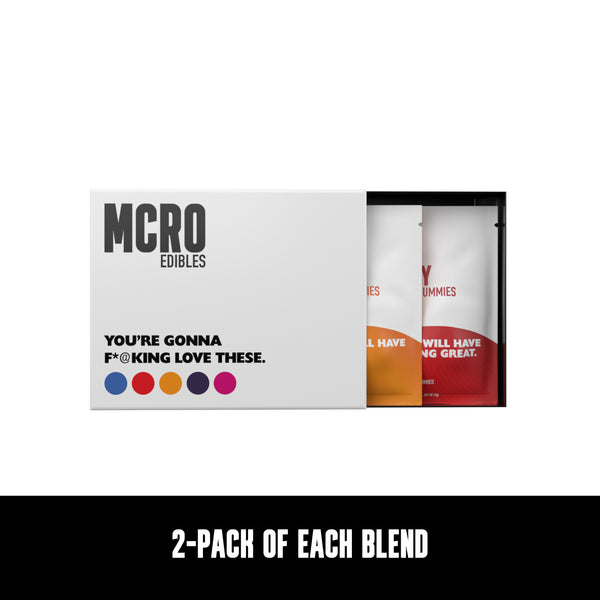
The whole point is control. You get a predictable microdose, not a mystery blast, so you can dial in the exact experience you want. Not sure where to start? Our MCRO Sample Box lets you try the lineup and find your perfect nighttime match before you commit to a full pack.
How Should You Use THC for Better Sleep?
Getting the most out of a THC sleep gummy is less about willpower and more about strategy. A few blunt rules:
-
Start low. One low-dose gummy is plenty for most people. You can always take more next time, but you cannot un-take a dose that put you on the ceiling.
-
Time it right. Edibles take a while to kick in, so take yours about 45 to 60 minutes before you actually want to be asleep.
-
Do not stack blindly. Mixing THC with alcohol or other sedatives can amplify effects in unpredictable ways. Keep it simple, especially while you learn your dose.
And if you are wondering why a THC gummy feels so different from popping an old-school sleep pill, we covered exactly that in why THC gummies for sleep do not feel like traditional sleep aids.
The Bottom Line: THC vs CBD for Sleep
CBD is the calm. THC is the closer. If your nights fall apart because you cannot stop thinking, CBD can help clear the runway. But if you want to reliably fall asleep and stay asleep, a low, well-formulated dose of THC is usually the stronger play. The trick is respecting the dose and choosing a product built for rest, not just a random gummy with pretty packaging.
That is exactly the lane MCRO was built for: simple, predictable, functional microdosing that fits your life instead of hijacking it. When you are ready to actually sleep, At Night is waiting.
Frequently Asked Questions
Is THC or CBD better for sleep?
It depends on your specific issue. THC is generally more effective for falling asleep quickly and staying asleep, because it has sedating effects and can shorten the time it takes to drift off. CBD is non-intoxicating and works more indirectly by easing anxiety and stress, which helps if a racing mind is what keeps you awake. For most people who simply struggle to fall asleep, a low dose of THC tends to be the more reliable option, while CBD makes a solid supporting ingredient.
Does CBD make you sleepy or keep you awake?
CBD can do both depending on the dose, because it appears to be biphasic. Lower doses of CBD may feel mildly alerting for some people, while higher doses tend to feel more relaxing. CBD does not sedate you the way THC can. It is better thought of as a calming compound that quiets the mental noise keeping you up, rather than a direct knock-out ingredient.
How much THC should I take for sleep?
Most people do best starting with a low dose, in the range of about 2.5 to 5 mg of THC, taken 45 to 60 minutes before bed. Research suggests lower nighttime doses are less likely to disrupt REM sleep or cause next-day grogginess than large doses. Start with one low-dose gummy, see how it hits, and adjust from there. With THC and sleep, more is not better, and a precise microdose usually beats a heavy dose.
Can you take THC and CBD together for sleep?
Yes, many people combine them and find the mix works better than either alone, since CBD's calming effect can complement THC's sedating effect. That said, the ratio and dose matter, and some research suggests high combined doses may affect deep sleep. The most effective sleep formulas often pair a modest THC dose with sleep-specific ingredients like melatonin and functional mushrooms rather than relying on cannabinoids alone.
Will THC gummies leave me groggy the next morning?
They can if the dose is too high. Next-day grogginess is usually a sign you took more THC than you needed. Research indicates lower nighttime doses tend to preserve REM sleep and reduce that hungover feeling, while larger doses are more likely to leave you foggy. Sticking to a microdose and taking it early enough before bed goes a long way toward waking up clear-headed.