
It is 1 a.m. and you are doing math. If you fall asleep right now, you get five hours and forty minutes. Now five and a half. Now five. Welcome to the club, it is enormous. According to the CDC's National Center for Health Statistics, 30.5% of U.S. adults slept less than seven hours a night in 2024, and 18.1% reported trouble staying asleep. You are not broken. You are just one of a few hundred million people staring at a ceiling.
So you started searching how much THC to take for sleep, which is exactly the right question and almost nobody answers it honestly. Most brands respond by pointing at a 25mg gummy and wishing you luck. We are going to give you an actual number, the research behind it, and a method for finding your own dose instead of borrowing someone else's.
How much THC should you take for sleep?
For most adults, the effective range for sleep is 2.5mg to 5mg of Delta 9 THC, taken 60 to 90 minutes before bed. Start at 2.5mg if you are new to edibles or coming back after a long break. Move up to 5mg if 2.5mg leaves you relaxed but still wide awake. Experienced consumers with a real tolerance may land at 10mg, but treat that as a ceiling for sleep rather than a starting line.
That is going to disappoint anyone who came here hoping we would bless a 25mg gummy. Sorry. Here is why more THC is not the move when your goal is sleep.
Why does a low dose of THC work better for sleep than a high dose?
THC does not behave like most things you buy. With coffee, more caffeine means more alert, right up until you are vibrating. THC is biphasic, meaning the effect can flip direction as the dose climbs. A little calms you down. A lot can wind you right back up.
The research on low dose versus high dose is not subtle
In a placebo-controlled study published in Drug and Alcohol Dependence, researchers gave 42 healthy volunteers either 7.5mg of THC, 12.5mg of THC, or a placebo, then put them through a psychosocial stress test. The group at 7.5mg reported less subjective distress, while the 12.5mg group reported more negative mood and rated the task as more threatening. Same molecule, same protocol, five milligrams apart, opposite outcome.
That study measured stress, not sleep, but stress is the thing keeping most people awake. If the dose that is supposed to quiet your brain instead hands it something new to spiral about, you are not sleeping. You are lying in the dark thinking about your heartbeat.
The morning fog you blame on the gummy is usually a dose problem
Sedation and sleep are not the same thing, and the research on bigger doses makes that painfully clear. In a double-blind crossover study published in the Journal of Clinical Psychopharmacology, 15mg of THC produced no measurable improvement in nocturnal sleep, but the following morning subjects showed impaired memory, increased sleepiness, and changes in mood. You paid for the knockout and got the hangover for free.
This is the whole reason MCRO exists. If you want a longer breakdown of the mechanics, we wrote one on why low-dose THC works better at night than high doses, and another on why THC gummies for sleep don't feel like traditional sleep aids.
How do you find your personal THC dose for sleep?
Your dose depends on your body weight, your metabolism, your tolerance, what you ate at dinner, and how thoroughly your day wrecked you. Anyone promising a universal number is guessing. What we can give you is a method that takes about a week and replaces guessing with data.
Nights one through three: start at 2.5mg
Take half of a 5mg gummy, 60 to 90 minutes before you want to be asleep. Then leave it alone. The single most common mistake in edible dosing is redosing at the 45 minute mark because nothing has happened yet, which is exactly when the first dose is about to land. Now you have taken 5mg and you are watching your ceiling fan achieve sentience.
If 2.5mg gets you drowsy and quiet, congratulations, you are done. You are the cheapest customer we have and we are genuinely happy for you.
Nights four through seven: move to 5mg
If three nights at 2.5mg left you calm but still awake at midnight, go to a full 5mg gummy on the same 60 to 90 minute timeline. For most people, this is the number. It is the dose we built At Night around, and it is enough to drop the tension without erasing tomorrow morning.
While you run this, track three things each night: when you took it, roughly when you fell asleep, and how you felt at 8 a.m. That last one matters more than the first two. A dose that puts you out cold and leaves you useless until lunch is not a good dose. It is a trade you did not agree to.
When does 10mg of THC make sense for sleep?
Ten milligrams is for people with an established tolerance who have honestly tried 5mg and found it too light. If you consume THC regularly, 5mg may genuinely not register, and there is nothing wrong with stepping up to At Night Extra Strength. Just go in knowing that higher doses raise the odds of next-day grogginess, and that the research above says the ceiling is real. If 10mg leaves you foggy at work, the answer is not 20mg. The answer is a tolerance break.
When should you take THC before bed?
Edibles are slow. Your gummy has to move through your stomach and your liver before it does anything, which is why effects typically show up 45 to 90 minutes after you eat it and stick around for several hours. Take it 60 to 90 minutes before you actually want to be unconscious, not while you are already in bed refreshing your phone. We covered the full curve in our guide to how long an edible lasts and the practical version in our timing guide for microdose THC gummies.
If your problem is that you need to wind down faster, liquid changes the math. The Mixed Berry MCRO Shot delivers 5mg of Delta 9 THC with Reishi in a 2oz format that most people feel within 10 to 15 minutes, and you can sip half of it if you want to start lower. That is useful when you got home at 11 and cannot afford a 90 minute runway.
Why the rest of the formula matters as much as the milligrams
Here is the part most dosing guides skip. THC is one input. What else is in the gummy determines whether you get sleep or just sedation.
Melatonin is a signal, not a sledgehammer. A meta-analysis of 19 studies covering 1,683 subjects found that melatonin reduced the time it took to fall asleep and improved overall sleep quality, with effects that were modest but did not fade with continued use. Modest is the operative word. Your body produces melatonin in micrograms, so the 10mg mega-dose gummies on the shelf next to ours are a marketing decision, not a scientific one. Our At Night formula uses 2.5mg, which is enough to nudge your clock without leaving you groggy at sunrise.
Then there are the functional mushrooms. Reishi has been used for restlessness and sleeplessness for centuries, and modern animal research backs the traditional use: in a study published in the Journal of Ethnopharmacology, Ganoderma lucidum extract significantly increased total sleep time and non-REM sleep time in rats. We will be straight with you, because most brands will not. That is rodent data, and human clinical trials on reishi and sleep are still thin. We include 500mg of functional mushrooms because the mechanism is plausible and the traditional use is a couple thousand years deep, not because a headline told us to. If you want the longer version, read how medicinal mushrooms interact with THC and the MCRO method behind Functional THC.
Does THC mess with your sleep cycles?
Possibly, and anyone who tells you the answer is settled is selling something. A review in the Journal of Primary Care and Community Health summarizing the available human studies found that slow wave sleep decreased in three studies, increased in one, and was unchanged in another, while REM sleep was unchanged in four studies. The evidence base is small and messy.
What that uncertainty argues for is restraint. The studies showing the most disruption to sleep architecture generally used the heaviest doses, and the study that found next-day memory impairment used 15mg. Staying in the 2.5mg to 5mg range is how you get the wind-down without volunteering for the parts of the research nobody wants.
Does THC stop working for sleep if you take it every night?
It can. That same review notes that improvements in sleep quality appear to decline with chronic use, and tolerance to the sleep effects of THC has been documented since the early clinical work. Translation: if you take it every single night forever, the same dose eventually does less, and the natural instinct is to escalate.
Do not escalate. Do this instead. Use the lowest dose that actually works. Take two nights off a week, ideally the nights you are least worried about sleeping. If your dose has crept up over months, take three or four nights off and restart at 2.5mg. Your tolerance resets faster than you think, and 5mg starts working again. Our beginner's guide to safe microdosing practices covers the rest of the habits worth building.
Also worth saying plainly: THC is a tool, not a fix. If you are lying awake because of untreated anxiety, apnea, chronic pain, or a schedule that has you online until midnight, no gummy solves that. Talk to a doctor, and use the gummy for the nights when your brain just will not shut up.
How MCRO doses THC for sleep
Every product we make starts from the same premise: predictable effects beat maximum potency, every single time. That philosophy shows up most clearly in what we built for nights.
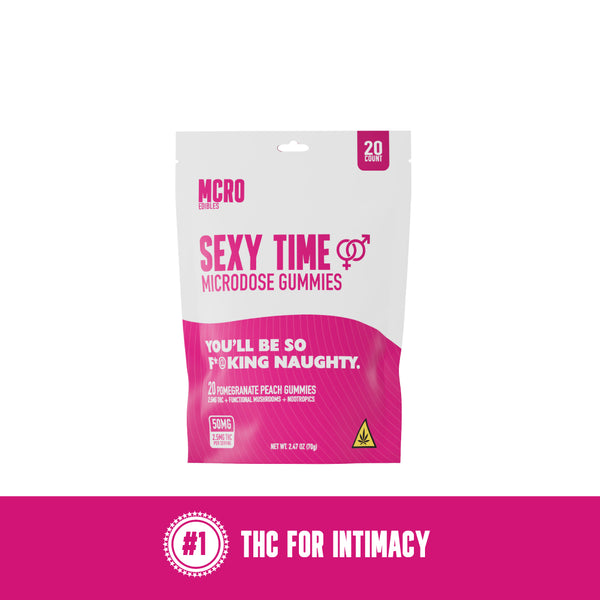
At Night is our sleep gummy, and it is the one most people should start with. Each black raspberry gummy carries 5mg of hemp-derived Delta 9 THC, 2.5mg of melatonin, and 500mg of functional mushrooms in a 20 count pack. Cut one in half for a 2.5mg starting dose, or take a full one when you already know where you land.
At Night Extra Strength runs the same formula at 10mg of Delta 9 THC for the tolerance crew who want the microdosing philosophy at a heavier weight.
The Mixed Berry MCRO Shot is 5mg of Delta 9 THC with Reishi in a fast-acting 2oz format for nights when you need the wind-down to start now.
Calm Down pairs 5mg of Delta 9 THC with 500mg of Reishi and skips the melatonin entirely, which is the right call if you would rather not take melatonin nightly or you want something for the hours before bed rather than the moment of it.
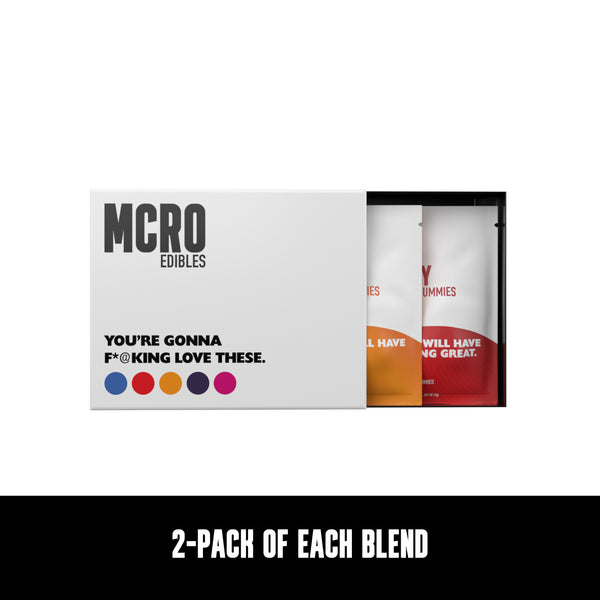
Not sure which one is yours? The MCRO Sample Box gives you two gummies from each blend so you can test rather than commit. And if you would rather verify than trust us, every batch is third-party tested and the lab reports live right on the site. Read them. Then go shop the full THC lineup and pick your dose.
What to skip when you take THC for sleep
Do not stack THC with alcohol. The nightcap is already sabotaging your second half of the night, and adding THC to it is how people end up nauseous instead of asleep. If you are looking to swap one for the other, we made the case in THC drinks versus alcohol.
Do not combine THC with prescription sedatives, sleep medications, or anything else your doctor has you on without asking them first. Do not drive or operate anything with an engine after dosing. Do not use these products if you are pregnant or nursing, and do not buy them if you are under 21. And do not take your first-ever edible on a Sunday night before a Monday you care about. Test on a night with no stakes.
Frequently Asked Questions
How much THC should I take for sleep if I have never had an edible?
Start with 2.5mg of Delta 9 THC, which is half of a standard 5mg gummy, taken 60 to 90 minutes before bed. Give it a full 90 minutes before you decide it is not working, and do not take a second dose the same night. Run that dose for three nights before deciding whether to go up.
Is 5mg or 10mg of THC better for sleep?
For most people, 5mg. It is enough to ease tension and quiet a busy head without a high risk of next-day grogginess. 10mg makes sense for people with an established tolerance who have genuinely tested 5mg and found it too light. Research on higher doses has found next-morning memory impairment and increased sleepiness, so bigger is not automatically better here.
How long before bed should I take a THC gummy?
Take it 60 to 90 minutes before you want to be asleep. Edibles have to be digested and metabolized before they take effect, so most people feel a gummy 45 to 90 minutes after eating it. THC shots absorb faster and are typically felt within 10 to 15 minutes.
Can I take THC for sleep every night?
You can, but tolerance builds and research suggests improvements in sleep quality can decline with chronic use. Use the lowest dose that works, take a couple of nights off each week, and if your dose has crept upward over time, take three or four nights off and restart lower rather than continuing to increase it.
What happens if I take too much THC before bed?
Too much THC can produce the opposite of what you wanted: a racing heart, anxiety, nausea, and a night of very shallow sleep. In controlled research, a 12.5mg dose increased negative mood compared to a 7.5mg dose. If it happens, you are not in danger. Drink water, put on something boring, and wait it out. Then go lower next time.
Is THC or CBD better for sleep?
They behave differently. Low-dose THC tends to be sedating, while CBD has shown alerting properties in some research, including a study where 15mg of CBD increased wake activity during sleep and counteracted the sedative effect of THC. For sleep specifically, a low dose of THC paired with melatonin and functional mushrooms is the approach we build around.
Will THC gummies make me groggy in the morning?
At the right dose, they should not. Morning grogginess is usually a sign that the dose was too high, that it was taken too close to bedtime, or that the formula was loaded with 10mg of melatonin. If you are waking up foggy, drop to a lower dose and move your timing earlier before you give up on it.