
Most people meet THC the wrong way. Somebody hands you a mystery brownie, you eat the whole thing because it tastes like a brownie, and ninety minutes later you are on a couch negotiating with your own heartbeat. Then you spend the next five years telling everyone that edibles are not for you.
The problem was never THC. The problem was the dose.
Microdosing flips the whole equation. Instead of taking enough THC to erase your afternoon, you take a small, measured amount that supports it. And when you do that consistently, day after day, something more useful happens than a one-off buzz. You stop chasing a high and start building a routine your body can predict.
This is the full breakdown of what a microdose of THC does, what the research supports, what changes when a little bit becomes a daily habit, and how to start without wasting six months guessing.
What Is Microdosing THC?
Microdosing THC means taking a dose small enough to shift how you feel without hijacking your day. You are not trying to get blitzed. You are trying to take the edge off, lift your mood a few degrees, sharpen your focus, or slide into sleep more easily, all while staying completely functional.
The standard dispensary edible is 10mg of Delta-9 THC. For a lot of people, that is a heavy dose, and it is the exact reason so many first experiences go sideways. A microdose typically lands between 1mg and 5mg, which is enough for your endocannabinoid system to respond and small enough that you can still answer emails, drive carpool, finish a workout, or hold a conversation without sounding like a philosophy major.
That is the entire premise behind MCRO's functional THC gummies. All Day and Sexy Time start at 2.5mg per gummy. Let's Go, Calm Down, and At Night sit at 5mg. Every gummy is portioned so you know exactly what you took, which is the part most brands skip.
How Many Milligrams Is a THC Microdose?
For most adults, a microdose of Delta-9 THC falls in the 1mg to 5mg range. Where you land inside that range depends on your body weight, your metabolism, your tolerance, and whether you have eaten. Someone brand new to THC might feel plenty at 2.5mg. A regular consumer might need the full 5mg to notice anything at all. The point of a microdose is not a specific number, it is the ceiling. You want a dose you can repeat tomorrow without escalating.
If you want the deeper walkthrough on finding your number, our beginner's guide to safe microdosing practices covers the process step by step.
What Happens in Your Body When You Take a Small Dose of THC?
THC works by interacting with your endocannabinoid system, a signaling network that helps regulate mood, stress response, appetite, pain perception, and sleep. THC binds primarily to CB1 receptors, which are concentrated in the brain and central nervous system, and to CB2 receptors, which show up more in immune tissue.
Here is the part that makes microdosing worth understanding. THC has what researchers call a biphasic dose response, which is a technical way of saying that low doses and high doses can produce opposite effects. Low doses tend to reduce anxiety and lift mood. Push past your personal threshold and the same compound can crank anxiety up instead.
This is not brand marketing. It has been measured. In a 2017 double-blind study published in Drug and Alcohol Dependence, researchers gave 42 healthy adults either a placebo, 7.5mg of oral THC, or 12.5mg of oral THC before putting them through a standardized psychosocial stress test. The group that received 7.5mg reported significantly less distress after the stressor, while the group that received 12.5mg reported worse mood overall and performed worse on the task. Same compound. Same study. Opposite outcome, driven entirely by dose.
More THC is not more relief. Past a certain point it is the thing causing the problem. That is the whole argument for microdosing in one sentence.
What Are the Benefits of Microdosing THC Daily?
The benefits people report from a consistent daily microdose cluster around four areas: stress, focus, sleep, and mood. What makes daily use interesting is that you are not riding a peak and crashing off it. You are holding a low, steady baseline, and the effects tend to feel less like an event and more like a background setting you adjusted.
Does Microdosing THC Help With Stress and Anxiety?
This is the most common reason people start, and the research above is the most direct evidence we have that dose is the deciding factor. A low dose of THC reduced stress reactivity. A moderate dose made it worse.
In practice, a daily microdose tends to show up as a lower reaction to the same annoying things. The traffic still sucks, the inbox is still full, the group chat is still going. You just stop white-knuckling it. Calm Down was built specifically for this, pairing 5mg of Delta-9 THC with 500mg of reishi mushroom so you unwind without getting flattened.
Worth saying plainly: THC is not a treatment for an anxiety disorder, and for some people it makes anxiety worse regardless of dose. We break down where the evidence is strong and where it is overhyped in Microdosing for Anxiety: Facts vs Hype and Does THC Help With Anxiety? What the Research Says.
Can Microdosing THC Improve Focus and Productivity?
This one surprises people, because the cultural stereotype of THC is a guy on a couch who forgot what he was saying. That stereotype is built on high doses.
At a microdose, a lot of people report the opposite: fewer intrusive thoughts, less mental static, and an easier time settling into a task. It is less about making you smarter and more about lowering the noise floor so you can hear yourself think. All Day is the daytime workhorse here at 2.5mg of Delta-9 THC with 1,000mg of functional mushrooms, and Let's Go pushes harder with 5mg plus 400mg of lion's mane when you need momentum instead of maintenance.
Does a Daily Microdose Help You Sleep?
Sleep is where dose matters most, and where most people get it backwards by taking more.
A smaller dose tends to help you fall asleep without the heavy, hungover morning that follows a big edible. At Night combines 5mg of Delta-9 THC with 2.5mg of melatonin and 500mg of functional mushrooms for exactly that reason. If you want the long version, read Why Low-Dose THC Works Better at Night Than High Doses and our full guide to microdosing THC for sleep.
One caution we will always give you straight: THC is not a long-term fix for a sleep disorder, and daily use for sleep is worth discussing with a doctor if you are relying on it every single night.
What About Mood, Libido, and Intimacy?
Low-dose THC is well known for elevating mood, and for a lot of people that carries into the bedroom. Reduced anxiety, heightened sensation, and a better mood are a pretty good starting lineup for intimacy.
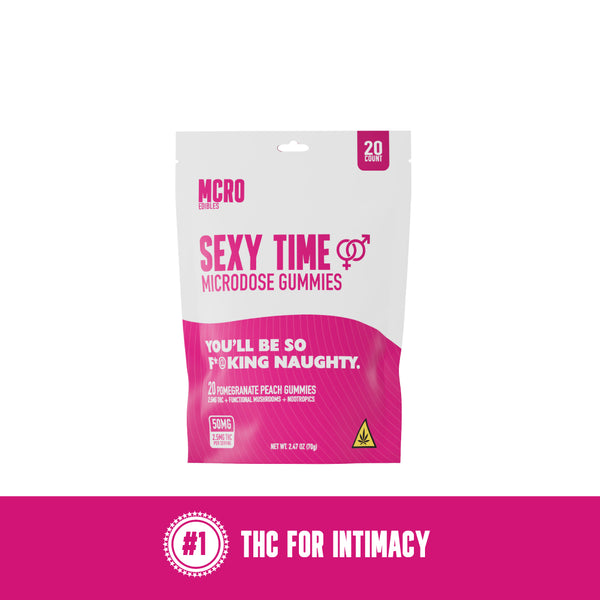
Sexy Time is our best-selling product for a reason. It pairs 2.5mg of Delta-9 THC with a 2,000mg nootropic blend built around cordyceps, red ginseng, maca, and tribulus. It is a microdose on purpose, because the goal is being present, not being unconscious.
Can a Daily Microdose Replace Your Nightly Drink?
This is the fastest-growing reason people pick up microdose gummies, and it has a name now. The California sober crowd swapped the nightly glass of wine for a low-dose edible and stopped waking up feeling like garbage. We covered the whole trend in What Is California Sober?
The appeal is simple. A 2.5mg or 5mg gummy gives you a wind-down ritual with a fraction of the next-day cost of alcohol.
Why Functional THC Changes the Math on Daily Microdosing
Anyone can put THC in a gummy. That is the easy part. What separates a microdose that works from a microdose that just sort of happens is what you pair it with.
MCRO builds every formula around functional THC, which means the Delta-9 is combined with mushrooms and nootropics chosen for a specific outcome. We also strip the terpenes out of our Delta-9 distillate, which gives us a cleaner base to build a targeted effect on top of instead of hoping the strain does the work. Our full explanation of that process lives in The MCRO Method Revealed and Discover Functional THC with MCRO Edibles.
The two workhorse mushrooms in our lineup have real human research behind them, and we are going to be honest about how far that research goes.
Lion's mane is the focus ingredient in Let's Go. In a double-blind, placebo-controlled trial published in Phytotherapy Research, adults aged 50 to 80 with mild cognitive impairment who took lion's mane for 16 weeks scored significantly higher on a cognitive function scale than the placebo group, and those scores declined again after they stopped taking it. That study used a much larger daily amount than a single gummy delivers, and it studied a specific older population, so treat it as promising evidence for the ingredient rather than a promise about what one gummy will do for you.
Reishi is the calming counterpart in Calm Down and in our Mixed Berry shot. In a randomized, double-blind, placebo-controlled trial published in the Journal of Medicinal Food, patients taking a reishi polysaccharide extract for eight weeks reported a 28.3 percent reduction in their sense of fatigue compared with 20.1 percent in the placebo group, and 51.6 percent of the reishi group were rated more than minimally improved compared with 24.6 percent on placebo. Again, that trial used a concentrated extract at a clinical dose, not a gummy.
The honest summary is that functional mushrooms have a real and growing evidence base, the strongest results come from sustained daily intake rather than one-off use, and the effect is supportive rather than dramatic. That is also the argument for consistency: these ingredients reward showing up every day far more than they reward a big weekend dose. If you want the deeper dive on how these ingredients interact with THC, we wrote about it in Medicinal Mushrooms: How Do They Interact With THC?
Is It Safe to Microdose THC Every Day?
For most healthy adults over 21, a daily microdose is a low-risk habit compared with most of the alternatives people reach for. That said, we are not going to pretend there is nothing to think about.
Tolerance is real. Your CB1 receptors adapt to regular THC exposure, and the effect you felt in week one may feel softer by week six. This has been imaged directly. In a study published in Molecular Psychiatry, researchers used PET imaging to show that chronic daily cannabis smokers had reduced CB1 receptor density in cortical brain regions, that the reduction correlated with years of use, and that receptor density returned to normal levels after roughly four weeks of monitored abstinence. That study looked at heavy chronic smokers rather than people taking 2.5mg a day, so it is not a one-to-one comparison. The useful takeaway is that tolerance builds with consistent exposure and it reverses when you take a break.
The practical move is to resist the urge to climb. If your usual dose stops landing, the answer is a two or three day pause, not doubling up. Microdosing only stays a microdose if you keep the dose micro. Our advanced playbook for microdosing THC goes deeper on cycling and dose management.
A few other things worth being straight about. Do not use THC if you are pregnant or nursing. Talk to your doctor first if you take prescription medications, especially sedatives, or if you have a heart condition or a history of psychosis. THC will show up on a drug test at any dose. And hemp-derived Delta-9 legality varies by state, which we track in our breakdown of the 2018 Farm Bill and where hemp law stands.
How Do You Start Microdosing THC?
Starting is simple, but people rush it and then blame the product. Give it a week and do it in order.
-
Start with one gummy at your lowest available dose, ideally on a low-stakes evening rather than before a work presentation.
-
Wait a full two hours before deciding it did not work. Gummies typically take 45 to 90 minutes to come on, and impatience is the single most common cause of a bad experience.
-
Take the same dose at the same time of day for three to five days before adjusting anything, because you are calibrating a baseline, not chasing a peak.
-
Adjust in half-gummy increments if you need more, and keep a rough note of what you took and how it landed.
-
Pick your blend based on the outcome you want rather than the strongest option on the shelf.
Timing matters more than most people expect, which is why we wrote a whole timing guide for microdose THC gummies. If you want to know how long the effects stick around before you plan your evening, How Long Does an Edible Last? has the full timeline.
Which MCRO Product Should You Start With?
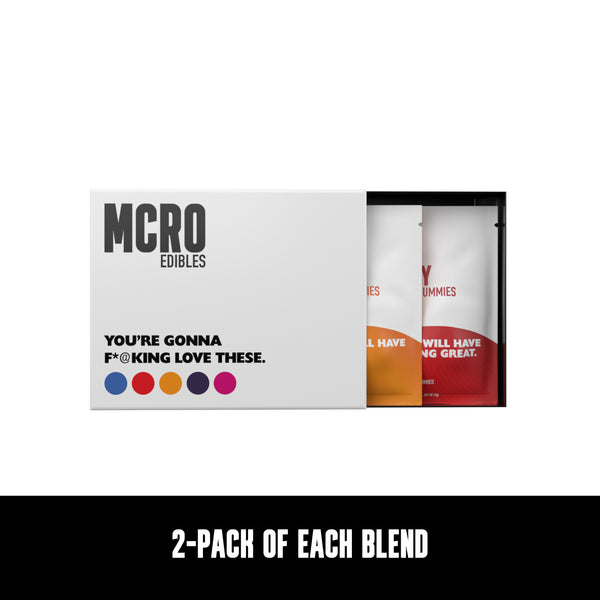
If you are new and you do not know which effect you want yet, start with the MCRO Sample Box. It is thirty dollars, it includes two gummies from every blend, and it lets you test All Day, Let's Go, Calm Down, At Night, and Sexy Time without committing to a full pack of the wrong one.
If you already know what you are after, go straight to the blend. All Day for steady daytime clarity, Let's Go for energy and focus, Calm Down for stress, At Night for sleep, and Sexy Time for intimacy. Every blend also comes in a 10mg Extra Strength version for experienced dosers who want a bigger lift while keeping the same functional formula, and you can browse the full lineup in our THC edibles collection.
If gummies are too slow for your schedule, MCRO Shots deliver the same 5mg microdose in a two ounce liquid format that most people feel within 10 to 15 minutes. Tropical Citrus is the sativa-style energy option and Mixed Berry is the indica-style wind-down. We compared both formats head to head in THC Shots vs Edibles.
And if you want the functional half without any THC at all, MCRO Pouches give you a nootropic Energy or Calm blend in a hands-free, tuck-and-go pouch. They are nicotine-free and tobacco-free, made in a GMP-certified facility, and we publish lab reports for both the raw ingredients and the finished product. We show you the receipts instead of asking you to trust us.
The Bottom Line on Microdosing THC Benefits
A daily microdose is not about getting high. It is about taking the smallest amount of THC that does the job and then being consistent enough that your body knows what to expect. The research supports the core idea clearly: low doses of THC reduce stress reactivity while higher doses can increase it, which means restraint is the strategy, not a compromise.
Pair that small dose with functional mushrooms and nootropics chosen for a specific outcome, keep the dose steady, take a break when tolerance creeps in, and you have a routine that works with your day instead of taking it from you.
That is the whole f*@king point of MCRO. Start small, stay consistent, and pick the blend that matches what you want your day to look like.
Frequently Asked Questions
What are the benefits of microdosing THC?
The most commonly reported benefits of microdosing THC are reduced stress and anxiety, improved mood, easier focus, better sleep, and heightened intimacy. Clinical research supports the stress benefit specifically at low doses, with one double-blind study finding that 7.5mg of oral THC reduced distress after a stress test while 12.5mg made mood worse. The practical benefit of a daily microdose is consistency: a small, repeatable dose that supports your day rather than derailing it.
How much THC is considered a microdose?
A microdose of Delta-9 THC generally falls between 1mg and 5mg per serving, compared with the 10mg standard dose most dispensary edibles use. MCRO gummies are formulated at 2.5mg or 5mg per gummy depending on the blend, with 10mg Extra Strength options for experienced dosers.
Can you microdose THC every day?
Many people do microdose THC daily, and for most healthy adults over 21 it is a low-risk routine. The main consideration is tolerance. Regular THC exposure causes your CB1 receptors to adapt, so the same dose may feel weaker over time. Research on chronic heavy cannabis users found that receptor density returned to normal after about four weeks of abstinence, which suggests tolerance is reversible with a break. If your dose stops landing, pause for two or three days rather than increasing it.
Will a THC microdose make me high?
A properly sized microdose should not produce the disorienting, couch-locked high people associate with full-strength edibles. Most people describe it as a mild lift in mood, a drop in tension, or an easier time focusing. If you feel intoxicated, your dose is too high for you, and the fix is to cut it in half.
How long does it take to feel a microdose of THC?
Gummies typically take 45 to 90 minutes to take effect because they have to pass through your digestive system first. MCRO Shots are liquid and absorb faster, with most people feeling effects within 10 to 15 minutes. Wait a full two hours before taking more of anything.
Do you have to microdose daily for it to work?
The THC effect is felt each time you take a dose, so daily use is not required for a single session to work. The functional mushroom and nootropic ingredients are a different story. The human research on lion's mane and reishi involved sustained daily intake over several weeks, which is why consistency matters more for the functional half of the formula than for the THC.
Is microdosing THC better than CBD?
They do different jobs. CBD is non-intoxicating and is often used for general calm and recovery, while low-dose THC produces a mild mood lift and a more noticeable shift in how you feel. Some people prefer one, some use both. If you want the functional benefits without any THC, MCRO Pouches deliver nootropic Energy or Calm blends without any cannabinoids at all.
Will microdosing THC show up on a drug test?
Yes. Delta-9 THC is Delta-9 THC regardless of the dose, and standard drug tests screen for THC metabolites. If you are subject to drug testing for work or any other reason, do not use THC products of any strength.