
Hangovers suck. Sunday scaries suck. Choking down a kombucha at happy hour while your friends are five tequilas deep also kind of sucks. Somewhere between blackout drunk and bone-dry sober, a third option showed up, and it has a name: California sober. It’s the lifestyle where you ditch the booze, the pills, and the hard stuff, but you keep cannabis in the rotation. For a growing number of people, it’s how they’re drinking less, feeling better, and still actually enjoying their weekends.
The trend isn’t a fringe thing anymore. According to Gallup’s 2025 consumption survey, the percentage of U.S. adults who say they drink alcohol has dropped to 54 percent, the lowest reading in nearly 90 years of tracking. At the same time, a Drug Rehab USA poll covered by Marijuana Moment found that one in three millennial and Gen Z workers now reach for THC drinks over booze at happy hour. People aren’t just curious. They’re actually switching. And microdose THC, the kind that lifts you without leveling you, is at the center of it.
This guide breaks down what California sober actually means, why it’s blowing up right now, and where functional, microdosed THC products like MCRO’s edibles and shots fit into the picture. No fluff, no preaching, no pretending alcohol was ever good for you. Just the facts about a movement that’s changing how an entire generation gets lit.

What Does California Sober Actually Mean?
California sober (sometimes shortened to "Cali sober") is a harm-reduction approach to drinking and drug use. The basic deal: you cut out alcohol and hard drugs, but you allow yourself cannabis, and sometimes psychedelics, as part of a healthier lifestyle. It’s not abstinence. It’s not moderation in the AA sense. It’s a deliberate choice to swap the substances that wreck you for ones that don’t.
The term got mainstream traction in 2021 when Demi Lovato used it to describe their recovery from a near-fatal opioid overdose, but the phrase actually traces back to a 2019 Vice article by writer Michelle Lhooq, who heard people in Los Angeles using it to describe quitting everything except weed. There’s no medical definition. There’s no rulebook. For most people who identify with it today, California sober means: alcohol is out, cannabis is in.
The reason the term resonates is because it captures something traditional sobriety language doesn’t. Plenty of people aren’t alcoholics. They just don’t want to feel like garbage anymore. They want to unwind without a hangover, socialize without slurring, and sleep without 3 a.m. anxiety wake-ups. California sober gives that lifestyle a name and a community.
Why Is California Sober Trending Right Now?
A few things hit at once. Alcohol’s health halo cracked, cannabis got easier to buy, and a generation that grew up watching their parents nurse wine-o’clock habits decided they wanted something different. The data backs it up hard.
Gallup’s 2025 survey is the biggest signal flare. A majority of Americans (53 percent) now say even one or two drinks a day is bad for your health, up from just 28 percent in 2018. Young adults under 35 saw the steepest decline in drinking, dropping from 59 percent in 2023 to 50 percent in 2025. That’s the first time their drinking rate has fallen below middle-aged and older adults. Translation: the kids are not, in fact, alright with getting blackout drunk anymore.
At the same time, cannabis perception flipped. A YouGov poll from April 2024 found 64 percent of Americans believe regular alcohol use is riskier than regular marijuana use. And research from New Frontier Data showed 69 percent of consumers ages 18 to 24 prefer cannabis to alcohol. The cultural script has changed. Showing up to dinner with a THC seltzer instead of a six-pack is no longer weird. It’s the new normal.
Add in the rise of low-dose, predictable products, and you’ve got a perfect setup. People aren’t trying to get destroyed. They’re trying to feel good. A 2.5mg or 5mg THC microdose hits that sweet spot of relaxed, social, and clear-headed without the next-day wreckage of three glasses of wine.

How Does Microdose THC Compare to Alcohol?
This is where it gets interesting. The comparison isn’t close, and the science is increasingly on cannabis’s side, at least when it comes to harm reduction. Here’s how the two stack up on the things people actually care about.
Calories and Physical Toll
A standard glass of wine is around 125 calories. A beer can run 150 to 200. A cocktail with mixers can hit 300 or more. A 5mg MCRO gummy is around 10 calories. Alcohol also dehydrates you, disrupts REM sleep, and inflames your gut. THC, especially at microdose levels, does none of those things in any meaningful way.
The Next Morning
Alcohol hangovers are caused by dehydration, congeners, and the toxic breakdown product acetaldehyde. THC doesn’t produce any of those. Microdose THC users consistently report waking up clear-headed, not foggy or nauseous. No "what did I say last night" spiral. No three coffees just to function.
Long-Term Risk
The CDC has warned that even light drinking may increase chronic disease risk, and former U.S. Surgeon General Vivek Murthy called on Congress to update alcohol warning labels to reflect links to cancer. Cannabis has its own risks at high doses and with chronic heavy use, but at microdose levels, the safety profile is significantly more favorable. There’s a reason the World Health Organization has reported that no level of alcohol is safe. They haven’t said the same about 5mg of Delta-9.
Social and Functional Use
Here’s the kicker. You can take a 2.5mg or 5mg THC microdose at 5 p.m. and still be a functioning human at 9 p.m. Two glasses of wine on a weeknight? You’re slower, your sleep is trash, and you’re reaching for Advil at breakfast. This is exactly why so many people are switching to functional THC for the same use cases alcohol used to fill, like winding down after work, social events, dates, or hanging out with friends. For a deeper breakdown, our full guide on THC drinks vs. alcohol lays out every comparison side by side.

What Makes Functional THC the Smartest California Sober Choice?
Here’s where MCRO sits apart from the rest of the THC market. Most edibles just give you THC and call it a day. We pair every gummy with functional mushrooms or a nootropic blend, so you’re not just dosing for the buzz, you’re dosing for a specific feeling. That’s the difference between "I’m high" and "I’m exactly where I want to be."
What Are Functional Mushrooms Doing in My Gummy?
Functional mushrooms are non-psychedelic mushrooms (we’re not talking about the trippy kind) with bioactive compounds that have been used for centuries in traditional medicine and are now backed by emerging clinical research. The three that show up most in our lineup are Lion’s Mane, Reishi, and Cordyceps.
Lion’s Mane is the brain mushroom. A 2023 double-blind, placebo-controlled study published in the journal Nutrients gave healthy adults 1.8 grams of Lion’s Mane daily and found faster cognitive performance on attention tasks within 60 minutes of a single dose, plus a trend toward reduced subjective stress after 28 days. It’s why we pair it with THC in our Let’s Go gummies, the daytime-focused formula built for energy and focus without the crash.
Reishi is the chill mushroom. Its triterpenes and polysaccharides have been studied for their role in calming neuroinflammation and supporting stress response. We use it in Calm Down gummies and our Mixed Berry MCRO Shot to take the edge off without putting you to sleep.
Cordyceps is the energy mushroom, traditionally used to support stamina and oxygen utilization. It shows up in our Tropical Citrus MCRO Shot, our 2oz sativa-leaning THC shot for energy and focus. Same Delta-9 THC microdose. Different mushroom. Completely different ride.
Why Pairing Matters
Anyone can put THC in a gummy. What functional mushrooms do is give the experience a direction. Instead of a vague "I feel high," you get "I feel locked in" or "I feel relaxed but not asleep" or "I feel energized but not jittery." That predictability is what makes microdose THC sustainable as an alcohol replacement. You know what you’re going to feel, you know how long it’s going to last, and you know you’re not going to wake up tomorrow regretting it.
How Do You Start a California Sober Lifestyle?
There’s no certification, no 12-step program, no morning chant. Going California sober is just a decision and then a series of better choices. But there are some things that make the transition smoother, especially if you’re coming off a regular drinking habit.
Start with a Microdose, Not a Megadose
The biggest rookie mistake is treating cannabis like a shot of tequila and slamming a 25mg gummy. That’s how you end up texting your ex and Googling "am I dying" at 11 p.m. Start with 2.5mg to 5mg of Delta-9 THC. That’s what our standard MCRO Edibles deliver, and it’s the sweet spot for most adults transitioning off alcohol. Our beginner’s guide to safe microdosing practices walks through dosing in more detail.
Match the Product to the Moment
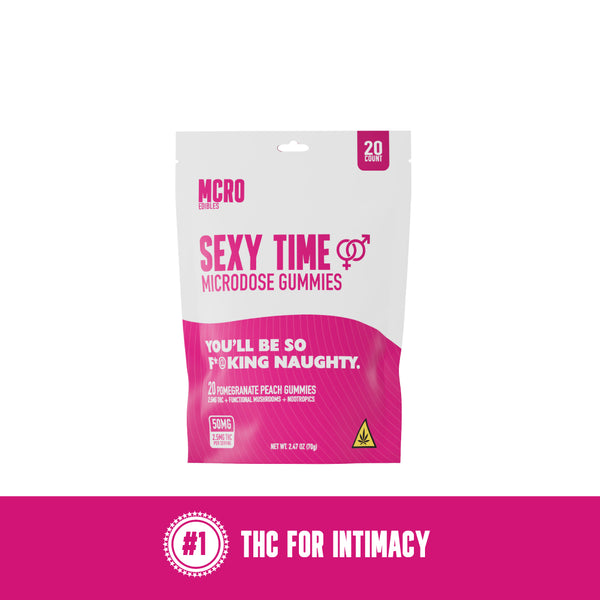
Different scenarios call for different formulas. Weekday wind-down: Calm Down. Weekend with friends: All Day or Let’s Go. Date night: Sexy Time. Sleep problems: At Night. This is exactly how you’d think about alcohol if you were being intentional, like wine with dinner versus whiskey before bed, except now you’re actually getting something useful out of it instead of just compounded damage.
Replace the Ritual, Not Just the Substance
A lot of drinking is about the moment, not the buzz. The clink of the bottle, the pour, the first sip after a long day. Build a new ritual around your microdose. A 5mg MCRO Shot over ice with a splash of seltzer hits the same psychological notes as a cocktail without the regret. Treat it like the upgrade it is.
Watch the Timing
Edibles take 45 to 90 minutes to kick in and can last 4 to 6 hours. Shots hit in 10 to 15 minutes and last 1 to 3 hours. Plan accordingly. If you’re heading to dinner at 7, take a gummy at 5:30. If you’re already there and want something fast, grab a shot. The point is to feel good when you want to feel good, not to be guessing.

Is California Sober Right for Everyone?
Honest answer: no. California sober is a harm-reduction lifestyle, not an addiction recovery program. If you’re dealing with substance use disorder, the medical community is clear that abstinence-based recovery is the safer path, and you should talk to a professional, not a gummy company. Even Demi Lovato, the person who put the term in the cultural mainstream, eventually walked it back and endorsed full abstinence for their own recovery. Different people, different paths.
But for the millions of Americans who aren’t addicts, who just want to drink less and feel better, California sober is a legitimately smart move. You’re trading a substance with documented links to cancer, heart disease, and disrupted sleep for one with a significantly more favorable safety profile and actual functional benefits when paired with the right ingredients. It’s not a hack. It’s common sense catching up to a generation that already figured it out.
Frequently Asked Questions About California Sober
Is California sober the same as being completely sober?
No. California sober means cutting out alcohol and hard drugs while still using cannabis (and sometimes psychedelics) in moderation. Fully sober means abstaining from all mind-altering substances. The two are distinct lifestyles with different goals. California sober is rooted in harm reduction, not abstinence.
Can you really replace alcohol with THC gummies?
For a lot of people, yes. Microdose THC products like our 2.5mg and 5mg gummies are designed to deliver the social, relaxation, and wind-down effects people use alcohol for, without the dehydration, calories, or next-day hangover. The key is starting with a low dose and choosing a formula that matches what you’re trying to feel.
How much THC should I take if I’m used to drinking alcohol?
Start with 2.5mg to 5mg of Delta-9 THC, which is what a single standard MCRO gummy delivers. That dose is roughly equivalent to a relaxed wind-down, not a heavy buzz. Give it 60 to 90 minutes before deciding whether to take more. The biggest mistake new users make is stacking doses too fast because edibles take longer to hit than alcohol does.
Will microdose THC make me feel high?
At a true microdose level (2.5mg to 5mg), most people feel a subtle lift in mood, relaxation, or focus without feeling impaired or "high" in the traditional sense. The functional mushroom pairings in MCRO products are designed to give the effect a direction, so you feel something specific (calm, energy, sleep support) rather than just stoned.
Is California sober safer than drinking?
The research increasingly suggests cannabis is lower-risk than alcohol at comparable use levels. The WHO has stated no level of alcohol is safe, and alcohol is linked to cancer, liver disease, and cardiovascular problems. That said, cannabis at high doses and with chronic heavy use has its own risks. Microdose THC, in moderation, is generally considered a meaningfully safer choice for adults than regular drinking.
Can I be California sober and still go out with friends who drink?
Absolutely. That’s actually the whole point. You can grab a 5mg MCRO Shot before dinner or take a gummy 90 minutes before you head out, and you’ll be social, relaxed, and present, just without the alcohol. A lot of California sober people find they’re more engaged at events because they’re not stuck in the bathroom or fading by 10 p.m.
What MCRO product is best for someone just starting California sober?
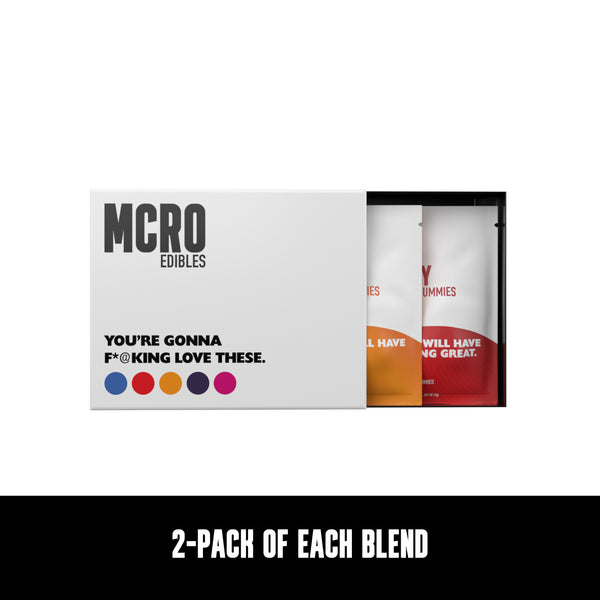
For someone replacing a casual drinking habit, the All Day gummy at 2.5mg or the Calm Down gummy at 5mg are both solid entry points. If you want something faster-acting that feels more like a cocktail replacement, try a Mixed Berry MCRO Shot. The Sample Box is also a good way to test the whole lineup and figure out which formula matches your lifestyle.