There are a lot of ways to get THC into your system, and most of them weren't built with microdosing in mind. Smoking a joint, ripping a vape, popping an edible, or sipping a THC drink will all technically deliver Delta-9 to your bloodstream, but how it gets there, how fast it hits, how long it lasts, and how predictable the ride feels are completely different conversations. If you're trying to actually control your experience instead of getting blasted into the couch, those differences are everything.
This is the no-BS breakdown of smoking vs THC edibles vs THC drinks. We're going deep on how each one works, what the science says about absorption and bioavailability, where each format wins, and which one actually makes sense if you're trying to microdose. By the end, you'll know exactly which delivery method fits your day, your tolerance, and your goals, and why MCRO built our entire lineup around the two formats that give you the most control over the experience.

What Does It Actually Mean to Microdose THC?
Microdosing THC means taking a low, controlled dose, usually somewhere between 1mg and 5mg of Delta-9 THC at a time, with the goal of feeling functional benefits without getting fully stoned. We're talking better mood, sharper focus, easier sleep, less anxiety, or more presence during sex, without losing your whole afternoon to the couch. If you want the full primer on dosing, timing, and how to start, our beginner's guide to safe microdosing practices walks through the whole playbook.
The catch is that microdosing only works if you can actually predict what's hitting your bloodstream and when. That's where the delivery method becomes more important than most people realize. The way you take THC determines how much of it your body actually absorbs, how fast you feel it, how long it lasts, and how consistent each session feels. A 5mg dose smoked is not the same as a 5mg dose eaten or sipped. Same number on paper, very different experience in real life.
How Does Smoking THC Actually Work?
Smoking sends Delta-9 THC directly into your lungs, where it crosses into your bloodstream through the alveoli and reaches your brain in minutes. It's the fastest delivery method out there, which is why it's been the default for decades. But fast doesn't mean controlled, and it definitely doesn't mean consistent.
According to a peer-reviewed review of cannabis pharmacokinetics, inhaled THC has a bioavailability of roughly 10% to 35%, depending on how deep you inhale, how long you hold, the size of the hit, and where the smoke lands in your lungs. Translation: even if a joint contains a known amount of THC, the dose your body actually receives varies wildly from puff to puff and person to person.
Why Is Smoking Hard to Microdose With?
Trying to microdose by smoking is like trying to measure flour with a soup ladle. The dose is moving every time you inhale. Two people sharing the same joint will absorb completely different amounts. The same person taking two hits on Monday and two hits on Friday can have two completely different highs. There's no standardized milligram count, no reliable repeatability, and no real way to dial in 2.5mg or 5mg with any precision.
Smoking also brings the obvious downsides: combusted plant material, lung irritation, the smell that follows you for hours, and a social setting that doesn't exactly fit a Tuesday afternoon work session. Effects also fade fast, usually within one to three hours, which means more frequent dosing if you want sustained benefits. For a recreational session with friends, sure. For predictable, functional microdosing? It's the wrong tool for the job.

How Do THC Edibles Work in Your Body?
Edibles take a completely different route. When you chew and swallow a THC gummy, the Delta-9 travels through your digestive system to your liver, where it goes through what scientists call first-pass metabolism. Your liver converts a portion of that THC into a metabolite called 11-hydroxy-THC, which is what creates the longer, body-heavy effect edibles are known for.
Onset is slower. Research on orally administered cannabis shows that psychotropic effects are typically delayed 30 to 90 minutes after ingestion, with peak plasma concentration hitting between 2 and 6 hours and total effects lasting 4 to 12 hours. That's a much longer ride than smoking, which is both the best and worst thing about edibles depending on what you want out of the experience.
The bioavailability of oral THC is also lower than inhalation. Studies have measured it anywhere from 4% to 12% for traditional edibles, though newer formulations push that range higher. But here's the trade-off that matters: even though less THC enters your bloodstream, the 11-hydroxy-THC your liver produces is significantly more potent than the original Delta-9. That's why a 5mg edible can feel meaningfully different than 5mg of inhaled THC. Less reaches your blood, but what does reach it hits harder and lasts longer.
Why Are Edibles the Gold Standard for Microdosing?
Edibles win on the one thing that matters most for microdosing: consistency. Every gummy is a known, fixed dose. When you take a 2.5mg All Day gummy, you know exactly how much THC is in your body. When you take a 5mg Calm Down, you know exactly what's coming. There's no guessing, no inhale variability, no "did I take too big a hit?" That predictability is the whole reason microdosing actually works as a wellness strategy instead of just a vibes-based experiment.
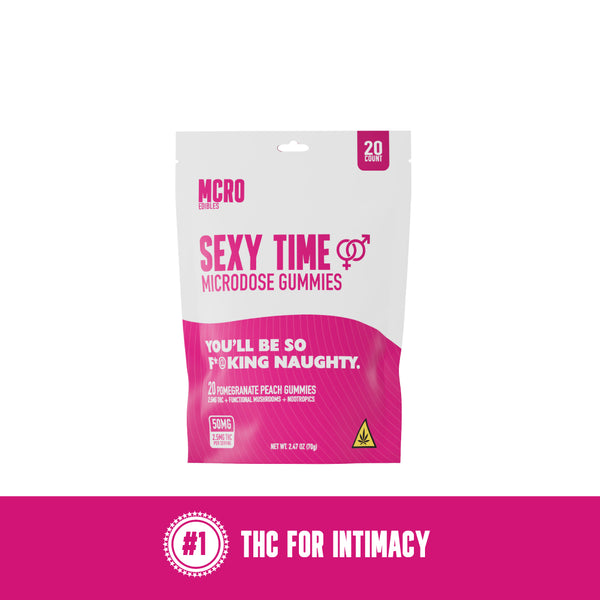
MCRO gummies go a step further by pairing every dose with functional mushrooms and nootropics, which is why we call it Functional THC. We strip the terpenes out of our Delta-9 distillate and rebuild each formula around the effect we want to deliver: Lion's Mane in Let's Go for clean energy and focus, Reishi in Calm Down for stress relief, melatonin and functional mushrooms in At Night for sleep, and a nootropic blend in Sexy Time for intimacy. That pairing is what makes the experience predictable in feel, not just in milligrams. If you want the full breakdown of how it works, our MCRO Method explainer gets into the science.
The one knock on edibles is the wait. If you've taken one and impatiently doubled up at the 30-minute mark, you already know how that movie ends. The fix is simple: start low, give it time, and trust the process. Our ultimate timing guide for microdose THC gummies breaks down exactly when to take a gummy depending on what you want the rest of your day to look like.

How Do THC Drinks and Shots Work?
THC drinks sit in an interesting middle lane between smoking and traditional edibles. Because they're liquid, they're absorbed faster than a gummy. Part of that absorption happens through the mouth and throat as you sip, which routes around some of the first-pass liver metabolism, and part of it still goes through the gut. The result is faster onset than a gummy, with effects that are shorter and more controlled than a typical edible.
For a sippable THC beverage, the timeline usually lands in the 15 to 45 minute onset range, with peak effects in about an hour and total duration of one to three hours. Compare that to four to twelve hours for a gummy. For a fast-acting THC shot, it's even quicker because the dose is concentrated and goes down in one shot.
Where Do THC Shots Fit Into the Microdosing Conversation?
A THC shot is essentially a microdosing precision tool disguised as a 2oz bottle. Our MCRO Shots pack 5mg of Delta-9 THC plus functional nootropics into a fast-acting liquid, and most people start feeling effects within 10 to 15 minutes. The Tropical Citrus version uses Lion's Mane and Cordyceps for an energy and focus lift. The Mixed Berry version uses Reishi for a calm, indica-style wind-down.
Shots solve a real problem that gummies can't: speed. If you want to feel something in 15 minutes instead of waiting an hour, a shot is your move. You can also sip half a shot to dial in an even lower dose, which makes them one of the most adjustable formats out there. The shorter duration is a feature, not a bug, since it means you can microdose for a specific window (like a workout, a social setting, or an evening out) without committing to a six-hour ride. For a deeper comparison of when each format makes sense, check out our breakdown of THC shots vs edibles.

Smoking vs Edibles vs THC Drinks: Side-by-Side Comparison
Here's how the three formats actually stack up when you put them next to each other for microdosing purposes. None of this is to say smoking has no place in the world. It's to say that if your goal is a controlled, repeatable, functional dose of THC, two of these three options are going to do that job way better than the third.
Onset Time
Smoking hits in seconds to minutes. THC drinks and shots hit in 10 to 45 minutes depending on format and how full your stomach is. Edibles typically take 30 to 90 minutes, sometimes longer if you ate a heavy meal beforehand. If you need fast and you also need precision, a THC shot is the sweet spot.
Duration
Smoking lasts roughly one to three hours. THC drinks and shots run about one to three hours as well. Edibles stretch out to four to twelve hours depending on dose and individual metabolism. That long tail is exactly why edibles dominate for nighttime use, all-day mood support, and any situation where you want the effect to stick around without re-dosing.
Dose Precision
Edibles are the most precise format you can buy. A gummy contains a fixed, lab-tested amount of THC, and you can split it in half for even smaller doses. THC shots are nearly as precise because each bottle contains a known dose, and you can sip half of it to dial in lower. Smoking is the least precise format because the dose you actually absorb depends on how you inhale, how long you hold, and the strain itself.
Bioavailability
Inhaled THC is more bioavailable per milligram than oral THC, but bioavailability is only half the story. The 11-hydroxy-THC produced when your liver metabolizes edibles is more potent than Delta-9 itself, which is why oral doses don't need to match inhaled doses milligram for milligram to produce a meaningful effect. The practical takeaway is that you can't compare 5mg smoked to 5mg eaten and expect them to feel the same.
Convenience and Discretion
Gummies and shots travel well, don't smell, look like normal wellness products, and can be taken anywhere. Smoking requires equipment, generates smoke, and isn't exactly subtle. For functional microdosing built into a daily routine, edibles and shots win this category without much of a fight.
Functional Stacking
This is where the comparison gets really lopsided. Smoking is just THC and combusted plant matter. A gummy or a shot can be formulated with functional ingredients that work alongside the THC to shape the experience. Lion's Mane has been studied for its effects on cognitive performance and stress, Reishi is widely researched for its calming and immune-supporting properties, and Cordyceps has been studied for energy and endurance. None of that comes built into a joint. All of it comes built into an MCRO product.

Which Method Is Best for Microdosing THC?
For most people serious about microdosing, the honest answer is edibles for the bulk of your routine, with THC shots as a fast-acting backup for specific moments. Smoking has its place for people who prefer the ritual, but it's not the right tool if you care about consistency, dose control, or stacking THC with functional benefits.
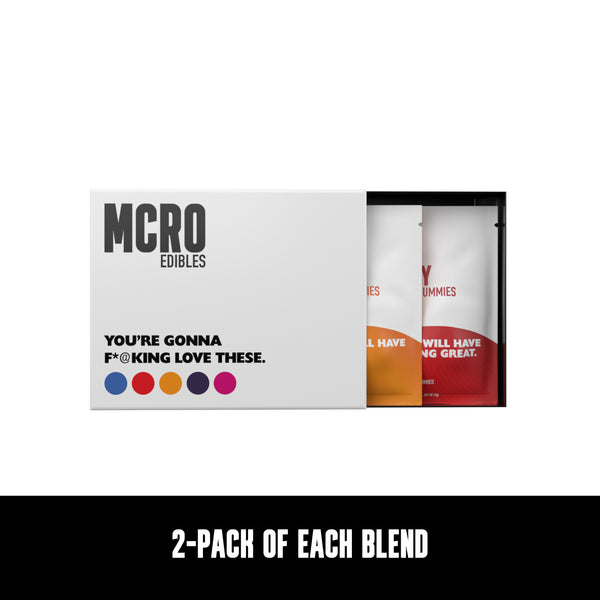
If you're new to all of this and not sure where to land, the MCRO Sample Box is the easiest way in. You get two gummies from each of our five formulas (All Day, Let's Go, Calm Down, At Night, and Sexy Time) so you can feel the difference between effects for yourself before committing to a full pack. It's basically a guided tour of what functional THC actually feels like across different parts of your day.
If you already know you want energy and focus, Let's Go gummies or the Tropical Citrus MCRO Shot are your go-to. If you want to chill out or take the edge off, Calm Down or the Mixed Berry MCRO Shot are the moves. If sleep is the goal, At Night is built for it, and our blog on why low-dose THC works better at night than high doses explains exactly why dialing down the dose actually improves sleep quality.
Why MCRO Built Around Edibles and Shots, Not Smoke
We built MCRO around two formats on purpose: gummies and shots. Both deliver a known, repeatable dose. Both can be stacked with functional ingredients that change the feel of the experience. Both fit into normal life without smoke, smell, or guesswork. And both let you actually customize how you feel without sacrificing what you have going on.
Every MCRO product is third-party tested, made with hemp sourced from Colorado farms operating under USDA Hemp Producer Licenses, and built with ingredients you can actually pronounce. We don't do mystery blends, we don't do unpredictable highs, and we don't do that "why is the room spinning" sh!t. We do precise, functional, microdosed THC that does what it says on the label. Whether you grab a pack of gummies, a six-pack of shots, or the Sample Box to figure out what works for you, you're getting the same standard: clean, consistent, and built for real life.
Frequently Asked Questions
Are THC edibles better than smoking for microdosing?
For microdosing specifically, yes. Edibles deliver a fixed, lab-tested dose every time, which is the single most important factor in getting consistent, repeatable effects. Smoking varies dose-to-dose depending on inhale technique, strain, and how long you hold each hit. If your goal is a functional, controlled experience instead of an unpredictable high, edibles are the clear winner.
How long do THC edibles take to kick in compared to drinks?
Traditional THC edibles like gummies typically take 30 to 90 minutes to kick in because they have to be digested and processed by the liver before the effects start. THC drinks and shots are absorbed faster, with onset usually in the 10 to 45 minute range, because part of the absorption happens through the mouth and throat. If you want our full breakdown on edible timing, check out our guide on how long edibles last.
Are THC drinks stronger than THC edibles?
Milligram for milligram, no. THC drinks and gummies of the same dose contain the same amount of Delta-9 THC. What changes is how that THC is absorbed and how long the effect lasts. Drinks hit faster and fade faster. Gummies take longer to come on and stick around longer. Neither is inherently stronger, they just deliver the experience on different timelines.
What is the most accurate way to dose THC?
Lab-tested edibles and THC shots are the most accurate ways to dose THC because each unit contains a verified, fixed amount of Delta-9. Smoking is the least accurate because the absorbed dose depends entirely on inhale technique and product variability. For anyone microdosing, starting with a 2.5mg or 5mg gummy or a 5mg shot is the cleanest way to control your experience.
Can I use both THC gummies and THC shots in the same day?
Yes, plenty of MCROdosers stack the two for different parts of their day. A common approach is using a shot for fast-acting effects (like before a workout or social event) and a gummy for longer-lasting support (like steady mood throughout the workday or wind-down before bed). Just remember that both contribute to your total daily THC intake, so factor that in when you're dosing.
Is microdosing THC safe?
When done responsibly with lab-tested, properly labeled products, microdosing THC at 1-5mg per dose is generally well-tolerated by most healthy adults. That said, THC affects everyone differently, and you should always talk to your doctor before starting, especially if you're pregnant, nursing, taking medications, or have an existing health condition. Our beginner's guide to safe microdosing covers everything you need to know to start smart.