If you've spent any time in the THC space, you've probably noticed that the options have exploded. Gummies, chocolates, seltzers, tinctures, and now THC shots, tiny bottles of liquid THC designed to deliver a fast, measured dose in a couple of sips. The format is newer, but the question everyone's asking is old: which one actually hits better?
The honest answer is that "better" depends entirely on what you're looking for. THC shots and THC edibles deliver the same compound, Delta-9 THC, but they get it into your bloodstream through different pathways. Those pathways change everything about the experience: how fast you feel it, how long it lasts, how intense it gets, and how much control you have over the ride.
This article breaks down the real, science-backed differences between THC shots and edibles so you can stop guessing and start choosing the format that actually fits your life. If you want a broader overview of THC-infused beverages first, our complete guide to THC drinks covers the full landscape.

How THC Edibles Work in Your Body
When you eat a THC gummy, brownie, or chocolate, the THC takes a specific route through your body. It enters your stomach, moves through your digestive tract, gets absorbed into the bloodstream via the small intestine, and then travels to your liver for processing. This entire journey is called first-pass metabolism, and it's the defining characteristic of the edible experience.
In the liver, enzymes convert Delta-9 THC into a metabolite called 11-hydroxy-THC (11-OH-THC). This is where things get interesting. According to research reviewed by Encore Labs, an early study found that when volunteers received equivalent one-milligram intravenous doses of either THC or 11-hydroxy-THC, the metabolite produced a faster onset and a more intense psychoactive experience. 11-hydroxy-THC has a significantly higher binding affinity for the CB1 receptor in your brain compared to standard Delta-9 THC. As Weedmaps' scientific overview explains, this higher binding affinity is what makes the metabolite so much more psychoactive: the tighter it binds, the harder it activates the receptor.
This metabolic conversion is why edibles feel fundamentally different from smoking or vaping the same amount of THC. It's not placebo. It's biochemistry. The Journal of Clinical Investigation published findings showing 11-hydroxy-THC to be substantially more potent than Delta-9 at producing subjective highs and elevated heart rate. And because first-pass metabolism produces far more 11-hydroxy-THC from oral consumption than from inhalation, edibles tend to deliver a heavier, more body-forward experience that can last four to eight hours or longer.
The trade-off for that intensity is time. Edibles typically take 45 to 90 minutes to produce noticeable effects, and in some cases up to two hours. That delayed onset is the root cause of almost every bad edible story you've ever heard: someone eats a gummy, feels nothing after an hour, takes another one, and then both doses hit simultaneously like a freight train. If that scenario sounds familiar, our timing guide for microdose THC gummies was written specifically to help you avoid it.
How THC Shots Work in Your Body
THC shots are small, concentrated liquid doses of THC, typically around two ounces, designed to be consumed quickly. The format is simple: you shake it, throw it back (or sip half to start), and let the liquid do its thing.
The reason THC shots hit faster than edibles comes down to absorption mechanics. When you consume THC in liquid form, it begins absorbing through the mucous membranes in your mouth, throat, and stomach lining before it ever reaches the small intestine or liver. This sublingual and gastric absorption provides a more direct route to your bloodstream, partially bypassing the extensive first-pass metabolism that edibles depend on.
Most quality THC shots take this further with nanoemulsification technology, which breaks THC oil into particles between 20 and 100 nanometers in size. These nano-sized particles are water-compatible and have dramatically more surface area available for absorption. According to research reviewed in the International Journal of Nanomedicine, nanoemulsion technology can increase the bioavailability of fat-soluble compounds by three to four times compared to conventional formulations. And as mg Magazine's overview of cannabis nanoemulsions details, this process allows cannabinoids to be absorbed through mucous membranes and intestinal walls in as little as ten to twenty minutes.
Because THC shots partially bypass the liver, they produce less 11-hydroxy-THC relative to the parent compound. The result is a lighter, more clear-headed experience that most people describe as functional and controllable rather than heavy and sedating. You feel it faster, you know where you stand sooner, and the effects tend to resolve in one to three hours instead of stretching across your entire evening.

THC Shots vs Edibles: The Head-to-Head Breakdown
Onset Time: How Fast Do You Feel It?
This is the biggest practical difference between the two formats. THC edibles typically take 45 to 90 minutes to produce noticeable effects, with some people reporting onset times of up to two hours depending on metabolism, body weight, and stomach contents. THC shots, especially those made with nanoemulsified THC, generally kick in within 10 to 30 minutes. That's not a marginal difference. It fundamentally changes how you dose and how much control you have over the experience.
With a THC shot, you can sip, wait 15 to 20 minutes, assess how you feel, and decide whether to finish the rest or stop there. With an edible, you're making a commitment to a dose and hoping it lands right an hour or two later. For anyone who's ever miscalculated with an edible, the speed of a THC shot isn't just convenient. It's a safety feature.
Duration: How Long Does It Last?
THC edibles deliver a long experience. Once they fully kick in, you can expect four to six hours of effects, and in some cases up to eight hours with higher doses. That extended duration is great when you want sustained relief for something like sleep or chronic discomfort. In fact, our blog on why low-dose THC works better at night than high doses explores why edibles' longer tail makes them particularly well-suited for overnight use.
THC shots, by comparison, typically produce effects lasting one to three hours. That shorter window is a genuine advantage for daytime use, social situations, or any scenario where you want to feel good for a couple of hours and then return to baseline without waiting half a day. Think of it like this: an edible is a movie marathon. A THC shot is a single episode. Both are great, but they serve different moments.
Intensity: How Hard Does It Hit?
This is where the science of 11-hydroxy-THC becomes really relevant. Because edibles undergo full first-pass metabolism in the liver, they produce significantly higher levels of this potent metabolite. As noted in Wikipedia's pharmacological overview, 11-hydroxy-THC has a binding affinity at the CB1 receptor that is roughly 100 times stronger than Delta-9 THC itself (Ki = 0.37 nM for 11-OH-THC vs. 35 nM for Delta-9). That's not a subtle difference. It explains the heavier, more immersive body experience that edible users consistently report.
THC shots, because they partially bypass hepatic metabolism, generate less 11-hydroxy-THC. The high tends to feel lighter, more cerebral, and more functional. Many people compare it to the social buzz of a cocktail rather than the deep body lock of an edible. Neither is objectively "better," but they're clearly suited for different purposes.
Dosing Control: How Easy Is It to Dial In?
Both formats offer clear dosing, but THC shots have a practical edge when it comes to real-time adjustability. With a shot, you can drink half, wait, and adjust. With a gummy, you either eat the whole thing or try to bite it in half (messy, imprecise, and honestly kind of annoying).
The faster onset of THC shots compounds this advantage. Because you know where you stand within 15 to 20 minutes, you can make informed decisions about whether to consume more. With edibles, the long delay between consumption and effect makes it much harder to calibrate on the fly. This is one of the core reasons THC shots appeal to newer consumers and microdosers alike. For a deeper dive into dosing strategy, The Advanced Playbook: Pro Tips for Microdosing THC covers the full spectrum of techniques.
Portability and Convenience
THC shots win this category hands down. A two-ounce bottle fits in a pocket, a purse, or a cooler. There's no chewing, no crumbs, no sticky packaging. You open it, drink it, and you're done. Edibles are portable too, but they require slightly more handling and can melt, stick together, or look conspicuous depending on the setting.
In social situations, THC shots also mirror the familiar ritual of taking a shot with friends. That social coding matters. It makes the experience feel normal and approachable rather than medicinal or counterculture.

When to Choose a THC Shot
THC shots are the right call when you want speed, control, and a shorter experience window. Specifically, consider a THC shot when you're heading to a social event and want something that kicks in before you walk through the door, when you need functional energy or focus during the day without a multi-hour commitment, when you're newer to THC and want the ability to start small and adjust quickly, or when you want a clean, no-BS alternative to alcohol. The best THC shots go beyond just THC. They incorporate functional ingredients like nootropics and adaptogenic mushrooms to layer in additional benefits. Medicinal Mushrooms: How Do They Interact with THC? breaks down how compounds like Lion's Mane and Reishi amplify and direct the THC experience toward specific outcomes like focus, calm, or recovery.
When to Choose a THC Edible
Edibles are the better choice when you want sustained, long-lasting effects and don't mind the wait. They're ideal for evening wind-down when you want relaxation that carries you through the night, for managing sleep when a longer duration of effects is beneficial (our microdosing THC for sleep guide walks through how to optimize this), for situations where you want a deeper, more body-forward experience, or for experienced consumers who know their dose and are comfortable with the longer onset timeline.
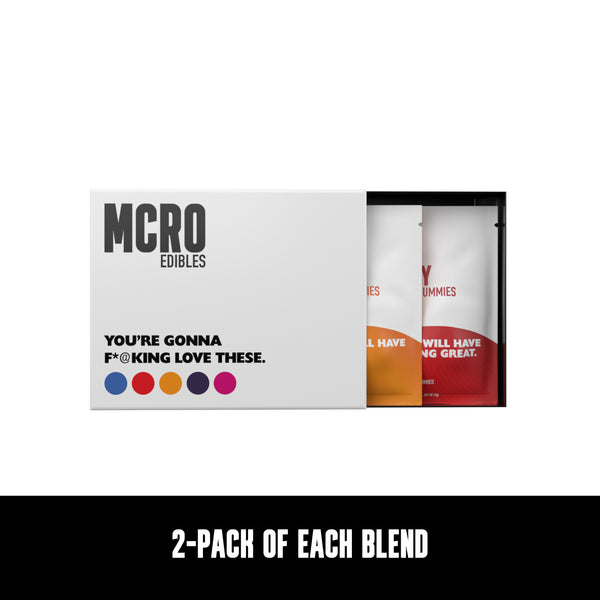
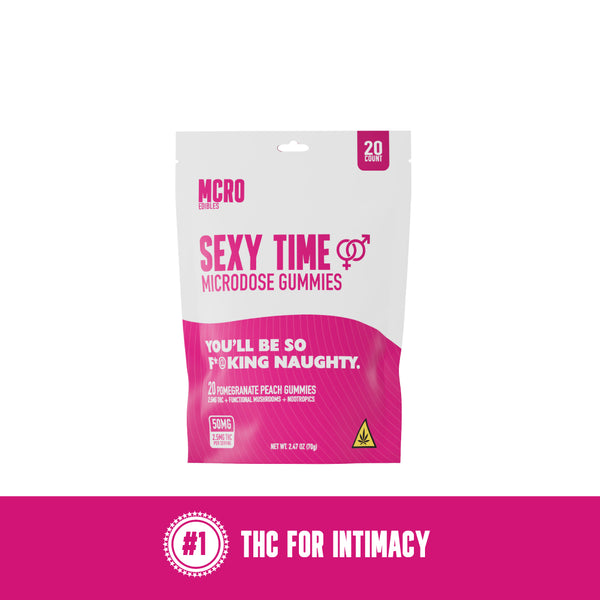
MCRO's edible lineup is built for exactly these kinds of intentional moments. At Night gummies pair 5mg Delta-9 THC with melatonin and 500mg of functional mushrooms for deep, restorative sleep. Calm Down gummies combine THC with Reishi for clean, clear-headed relaxation. And Let's Go gummies blend THC with Lion's Mane for energy and focus that actually holds up. Every formula is designed around a specific outcome, not just a generic buzz. For the full breakdown of what makes this approach different, read Discover Functional THC with MCRO Edibles.
Can You Combine THC Shots and Edibles?
Technically, yes. Some experienced consumers use a technique called "layering," where they take an edible first for the long-lasting base and then follow up with a THC shot 30 to 45 minutes later for a faster-hitting layer on top. As the shot's effects begin to taper around the two-hour mark, the edible's longer tail takes over and extends the peak.
That said, this is an advanced move. If you're new to THC or still dialing in your ideal dose, stick to one format at a time. The most common mistake people make with cannabis is stacking doses before the first one has fully hit. Start with a single product, learn how your body responds, and go from there. Our Beginner's Guide to Safe Microdosing Practices is a good foundation before you start experimenting with combinations.
Why Functional Ingredients Make THC Shots Even Better
A basic THC shot delivers THC in liquid form. A great THC shot delivers THC alongside functional ingredients that are specifically chosen to complement and direct the experience. This is the difference between "just THC" and what MCRO calls Functional THC.
Nootropics like Lion's Mane and Cordyceps bring cognitive and energy benefits that pair naturally with a fast-acting THC format. Lion's Mane is researched for its potential to support nerve growth factor production and cognitive function. Cordyceps is associated with energy, oxygen utilization, and physical performance. When combined with a low-dose THC shot, these ingredients don't just tag along. They shape the experience toward a specific, functional outcome.
Adaptogenic mushrooms like Reishi serve a different role. Reishi is known for its calming, stress-modulating properties, making it a natural fit for THC formulations aimed at relaxation and unwinding. We've covered the benefits of Reishi in detail in our Top Benefits of Calm Gummies blog, and the principles translate directly to liquid formats.
The point is this: the best THC shots aren't just about getting THC into your body faster. They're about creating a targeted experience that actually does something beyond a generic buzz. That's the philosophy behind everything MCRO builds, from our full edible lineup to what's coming next. For a deeper look at how we formulate for function, Welcome to MCRO 2.0: The Science Behind Your Evolved THC Experience tells the full story.
What Should You Look for in a THC Shot?
Not every THC shot on the market is worth your money. Here's what separates a quality product from filler.
Clear, transparent dosing. The label should tell you exactly how many milligrams of THC are in the bottle, per serving, and per shot. No ambiguity, no proprietary blend hand-waving. If you can't figure out how much THC you're consuming, that's a hard pass.
Nanoemulsified formulation. This is what drives faster onset and improved bioavailability. Research published in the International Journal of Pharmaceutics confirms that reducing cannabinoid particle size leads to significantly faster absorption and higher blood plasma concentrations. If a THC shot doesn't use nanoemulsion technology, you're likely looking at a slower, less predictable experience.
Functional ingredients with purpose. The best THC shots include nootropics, adaptogens, or functional mushrooms that are chosen for a specific effect, not thrown in as marketing filler. Look for real dosages of real ingredients, not a "proprietary blend" that could mean anything.
Third-party lab testing. Certificates of Analysis (COAs) from independent labs confirm that the product contains what the label claims and is free from contaminants like heavy metals, pesticides, and residual solvents. This is the bare minimum for any THC product you put in your body.
Quality sourcing. Where the hemp comes from matters. At MCRO, we source exclusively from licensed Colorado farms operating under the USDA Hemp Producer License program and put every product through rigorous pre-harvest and final product testing. That commitment to quality and transparency doesn't change regardless of the format.

Frequently Asked Questions
How long does a THC shot take to kick in?
Most THC shots produce noticeable effects within 10 to 30 minutes, with nanoemulsified formulations on the faster end of that range. This is significantly faster than THC edibles, which typically take 45 to 90 minutes due to the time required for digestion and liver metabolism.
How long do the effects of a THC shot last compared to an edible?
THC shots generally produce effects lasting one to three hours. THC edibles, because they undergo full first-pass metabolism and produce higher levels of the potent metabolite 11-hydroxy-THC, tend to last four to six hours and sometimes up to eight hours with higher doses.
Are THC shots stronger than edibles?
Not necessarily. At the same milligram dose, edibles often feel more intense because the liver converts a larger percentage of the THC into 11-hydroxy-THC, a metabolite with significantly higher binding affinity at the CB1 receptor. THC shots, because they partially bypass hepatic metabolism, tend to produce a lighter, more functional experience. Strength depends on the dose, the formulation, and your individual biochemistry.
Is 5mg of THC enough to feel something in a shot?
For most people, 5mg is the sweet spot for a clean, functional microdose. Because THC shots made with nanoemulsion technology have improved bioavailability, your body absorbs more of the THC compared to a standard edible at the same dose. If you're new to THC, start with half the shot (2.5mg) and wait 20 to 30 minutes before deciding whether to finish the rest.
Can I mix a THC shot with another drink?
Yes. THC shots can be consumed straight, poured over ice, or mixed into whatever you're sipping on. Mixing doesn't change the THC content or effects. However, avoid combining THC with alcohol, as both substances affect your central nervous system and mixing them can amplify impairment and increase the likelihood of negative side effects.
Will a THC shot show up on a drug test?
Yes. THC from shots is metabolized by your body the same way as THC from any other product. It produces the same metabolites that standard drug tests detect, regardless of whether the THC is hemp-derived or marijuana-derived, liquid or solid.
What is microdosing THC, and do shots work for that?
Microdosing means consuming very small amounts of THC, typically 1 to 5mg, to achieve subtle therapeutic effects without overwhelming psychoactive intensity. THC shots are excellent for microdosing because of their precise dosing, fast onset, and shorter duration. You get real-time feedback on how the dose is hitting, which makes it much easier to find your ideal level. To learn more about microdosing with functional ingredients, The Benefits of Microdosing With MCRO Edibles is a solid starting point.
FDA Disclosure: This product is not for use by or sale to persons under the age of 21. This product should be used only as directed on the label. It should not be used if you are pregnant or nursing. Consult with a physician before use, especially if you have a medical condition or use prescription medications. A doctor's advice should be sought before using any of these products. All trademarks and copyrights are property of their respective owners and are not affiliated with nor do they endorse this product. These statements have not been evaluated by the FDA. These products are not intended to diagnose, treat, cure or prevent any disease. By using this site you agree to follow the Privacy Policy and all Terms & Conditions printed on this site. Void Where Prohibited By Law.