
THC drinks are everywhere right now. Seltzers, shots, tonics, sparkling waters, even cannabis-infused mocktails. Walk into a dispensary or scroll any wellness-forward retailer and you'll see shelves stacked with them. And it's not hype for the sake of hype. THC-infused beverages are genuinely shifting how people consume cannabis, offering faster effects, more predictable dosing, and a social experience that gummies and flower just can't match.
The numbers back it up. According to Fact.MR's cannabis-infused drinks market report, the global market for cannabis beverages is projected to grow from roughly $1 billion in 2025 to $4.3 billion by 2035, fueled by increasing legalization, wellness trends, and consumer demand for smoke-free alternatives. Meanwhile, BDSA's Q1 2025 data shows cannabis beverage sales totaled $54.6 million in a single quarter, with year-over-year growth of 15% and emerging markets like Michigan more than doubling their beverage sales.
But with all the noise around the category, it's easy to get lost. What actually is a THC drink? How does it differ from a traditional edible? Who are these products for, and why should you care?
This guide breaks all of it down. Whether you're brand new to THC or you've been microdosing for years and want to understand the science behind liquid cannabis, consider this your no-BS starting point.

What Is a THC Drink?
A THC drink is exactly what it sounds like: a beverage infused with tetrahydrocannabinol, the primary psychoactive compound found in cannabis. These drinks deliver THC in liquid form rather than through flower, vaporizers, or solid edibles like gummies. They come in a range of formats including seltzers, shots, teas, sodas, lemonades, and even coffee. Most THC beverages on the market today use hemp-derived Delta-9 THC, which is federally legal under the 2018 Farm Bill as long as the product contains no more than 0.3% Delta-9 THC by dry weight.
The key differentiator with THC drinks isn't just the form factor. It's the way your body processes them. Because THC is delivered in a liquid, it's absorbed more quickly than it would be in a solid edible. Depending on the formulation, some THC beverages can produce noticeable effects in as little as 10 to 20 minutes, compared to the 45 to 90 minutes you might wait with a traditional gummy or brownie. That speed is a game-changer for anyone who's ever eaten an edible, waited an hour feeling nothing, then made the classic mistake of taking another one. If you've been there, our timing guide for microdose THC gummies breaks down how to avoid that exact scenario.
How Do THC Drinks Work in Your Body?
Understanding THC drinks starts with understanding how your body processes cannabinoids. When you eat a traditional edible, the THC travels through your digestive system and into your liver before it hits your bloodstream. This is called first-pass metabolism, and it's the reason edibles take so long to kick in and can feel so intense once they do. During this process, your liver converts Delta-9 THC into 11-hydroxy-THC, a metabolite that crosses the blood-brain barrier more efficiently and often produces stronger psychoactive effects. A 2025 crossover trial published by The Cannigma confirmed that this ratio of 11-hydroxy-THC to parent THC is greater than 1:1 following oral ingestion, which is why edible effects can feel qualitatively different from inhaled cannabis.
THC drinks sidestep a significant portion of this process. Because the THC is already in liquid form, a portion of it gets absorbed through the mucous membranes in your mouth and stomach lining before it ever reaches your liver. This sublingual and gastric absorption is faster, more direct, and tends to produce effects that feel cleaner and more controlled compared to the heavy, extended experience that traditional edibles are known for.
Most modern THC beverages take this a step further using a technology called nanoemulsification. This process breaks THC oil into incredibly tiny particles, often between 20 and 100 nanometers in size. These nano-sized particles are water-compatible, which means they mix evenly into liquid without separating. More importantly, their small size dramatically increases the surface area available for absorption in your body. Research published in the International Journal of Pharmaceutics has shown that reducing cannabinoid particle size leads to faster onset and significantly higher bioavailability, the amount of THC that actually makes it into your bloodstream. A separate review in the International Journal of Nanomedicine found that nanoemulsion technology can increase the bioavailability of fat-soluble compounds by three to four times compared to conventional formulations.
In practical terms, this means a 5mg THC drink made with nanoemulsion technology can feel meaningfully different from a 5mg THC gummy. Your body absorbs more of the cannabinoid, more quickly, producing effects that are easier to anticipate and manage. For a deeper look at how MCRO formulates for this kind of precision, check out The MCRO Method Revealed: Why Functional THC Hits Different.

THC Drinks vs. Edibles: What's the Difference?
On the surface, THC drinks and THC edibles might seem interchangeable. They're both oral consumption methods. They both avoid the lung health concerns associated with smoking or vaping. And they both deliver a measured dose of THC. But the similarities largely end there.
Onset time is the most obvious difference. Traditional edibles typically take 45 to 90 minutes to produce effects because the THC has to be digested and metabolized by the liver. THC drinks, especially those made with nanoemulsified formulations, can produce effects within 10 to 30 minutes. As ACS Laboratory's breakdown of nanoemulsion science explains, nano-sized particles bypass much of the digestive system and are absorbed directly through mucous membranes, leading to quicker uptake. For anyone who values predictability and control, that's a massive distinction.
Duration is another key difference. Because edibles undergo extensive first-pass metabolism, their effects tend to last longer, often four to six hours or more. THC drinks generally produce a shorter, more manageable experience in the range of one to three hours. That shorter window makes them more practical for social settings or situations where you want to feel good for a couple of hours and then get on with your day.
Intensity also differs. The liver's conversion of Delta-9 THC into 11-hydroxy-THC during the digestion of solid edibles tends to produce a more intense, body-heavy experience. THC drinks, because they partially bypass this metabolic pathway, tend to deliver a lighter, more clear-headed effect. Many consumers describe the experience as closer to the buzz of a cocktail than the deep body high of an edible.
For people who want precise control over their experience, microdose gummies like All Day still offer excellent value. But THC drinks provide a faster, lighter alternative that fits seamlessly into social and on-the-go moments.
What Types of THC Drinks Are Available?
The THC drink market has expanded rapidly, and the variety is pretty wild at this point. Here's a rundown of the most common formats you'll encounter.
THC seltzers and sparkling waters are the most popular category. They're light, refreshing, low-calorie, and typically dosed between 2.5mg and 10mg of THC per can. They're positioned as alcohol alternatives and they've found a strong audience among people exploring the sober-curious movement. According to Ekos's cannabis beverage analysis, the broader shift away from alcohol is one of the primary drivers of growth in this space.
THC shots pack a measured dose of THC into a small, concentrated liquid, usually around 2 ounces. Shots are designed for convenience and speed. You throw one back, and you're good. They're particularly popular among people who want a quick, functional dose without sipping on a full-size beverage. Some THC shots also incorporate functional ingredients like nootropics and adaptogenic mushrooms to layer in additional benefits like energy, focus, or calm. BDSA's data shows that shots now represent 11% of the total cannabis beverage subcategory, making them the second-largest format behind full-size drinks.
THC-infused teas and coffees blend cannabis with familiar beverages. These tend to be positioned toward the wellness crowd and often combine THC with other cannabinoids like CBD or CBN for targeted effects.
THC syrups and drink enhancers are concentrated liquid forms of THC that you can add to any beverage. These offer the most flexibility since you can mix them into water, juice, cocktails, or whatever you're sipping on.
THC sodas and lemonades round out the market with more flavor-forward options that appeal to consumers who want the experience to feel familiar and fun.

How Long Do THC Drinks Take to Kick In?
This is the question everyone asks first, and the answer is one of the biggest selling points of the category. Most THC drinks produce noticeable effects within 10 to 30 minutes, though the exact timing depends on a few factors.
Formulation matters a lot. Drinks made with nanoemulsified THC tend to hit faster because the smaller particles are absorbed more readily by your body. According to mg Magazine's overview of cannabis nanoemulsions, nanoemulsified cannabinoids are absorbed through mucous membranes and intestinal walls in as little as ten to twenty minutes, compared to one to two hours for standard oil-based formulations. A standard oil-based THC infusion in a drink may take closer to 30 to 45 minutes, which is still faster than a typical edible but not as quick as a nano product.
Your individual physiology also plays a role. Body weight, metabolism, whether you've eaten recently, and your overall tolerance to THC all influence how quickly you feel effects. As a general rule, drinking a THC beverage on a relatively empty stomach will produce faster onset compared to sipping one after a heavy meal. If you're newer to all of this, our Beginner's Guide to Safe Microdosing Practices walks through how to find your sweet spot without overdoing it.
The shorter onset time is a practical advantage because it allows you to dose more intelligently. Instead of eating a gummy and waiting an hour to see what happens, you can take a THC drink, assess how you feel in 15 to 20 minutes, and decide if you want more. This "sip and adjust" approach is why THC beverages are particularly appealing to newer consumers and people who prioritize control.
How Much THC Should You Drink? A Dosing Guide
Dosing with THC drinks follows the same foundational principle as any other form of cannabis consumption: start low and go slow. But the faster onset of drinks makes it a little easier to calibrate your ideal dose in real time.
For most people, 2.5mg to 5mg of THC is the sweet spot for a functional microdose. At this range, you can expect a subtle mood lift, mild relaxation, or a gentle boost in focus without any overwhelming psychoactive effects. This is the territory where THC works with your day instead of derailing it. For more on the science and strategy behind this approach, The Benefits of Microdosing With MCRO Edibles goes deep.
A 5mg dose is generally considered the standard serving for THC beverages and is the most common dosage you'll find on shelves. BDSA consumer insights show that 42% of edible consumers in adult-use states prefer a dosage of 10mg or less per occasion, with the 2.5mg to 5mg range being the most popular preference at 17%. For newer consumers, starting with half of a 5mg serving and waiting 20 to 30 minutes before deciding whether to consume more is a smart move.
Experienced consumers who have a higher tolerance may prefer 10mg or above, though it's worth noting that the improved bioavailability of nanoemulsified drinks means a 5mg nano dose can hit harder than a 5mg dose from a standard edible. A comprehensive review published in PMC on nanoemulsion technology for cannabinoids confirmed that nano formulations can achieve significantly higher peak blood concentrations and faster time-to-peak compared to standard oil-based products. Factor that in before doubling up.
At MCRO, microdosing isn't just a feature. It's the whole philosophy. Every product is built around delivering predictable, controlled effects that let you tailor your experience, whether that's a balanced mood boost with All Day gummies or deep relaxation with Calm Down. That same precision matters in the drink category too, and it's why dosing transparency should be non-negotiable when choosing a THC beverage.
What Are the Benefits of THC Drinks?
THC drinks offer a collection of practical advantages that are genuinely reshaping how people approach cannabis consumption.
Faster onset means less waiting and less guessing. The 10 to 30 minute window between sipping and feeling effects makes it dramatically easier to manage your experience compared to the hour-plus wait of traditional edibles.
Precise dosing is built into the format. Each drink or shot contains a clearly labeled amount of THC, and liquid consumption allows for easy portioning. Drink half if you want less. Drink the whole thing if you want the full dose. Simple.
Shorter duration makes THC drinks more practical for everyday situations. A one to three hour experience is a lot easier to fit into a social outing, a creative session, or a wind-down after work compared to a six-hour edible marathon.
Social compatibility is a huge draw. Cracking open a THC seltzer or throwing back a THC shot at a gathering is a familiar ritual. It mirrors the social experience of drinking alcohol without the hangover, the empty calories, or the declining motor skills.
Discretion and accessibility round out the list. THC drinks look like regular beverages. There's no smoke, no paraphernalia, no stigma. You can enjoy them anywhere you'd enjoy a normal drink.

Functional THC Drinks: Nootropics, Mushrooms, and Beyond
One of the most exciting developments in the THC drink space is the rise of functional formulations. These are beverages that combine THC with other active ingredients like nootropics, adaptogenic mushrooms, and botanical extracts to create targeted effects that go beyond just "getting buzzed." If you want the full picture on how THC and mushrooms work together, our deep dive on Medicinal Mushrooms: How Do They Interact with THC? covers the science in detail.
Functional mushrooms like Lion's Mane and Reishi have deep roots in traditional wellness practices and a growing body of modern research supporting their benefits. Lion's Mane is prized for its potential to support cognitive function, memory, and nerve growth factor production. Reishi, on the other hand, is known for its calming and adaptogenic properties, helping the body manage stress more effectively. We've written about the real-world applications of Reishi in Top Benefits of Calm Gummies and Lion's Mane in How MCRO's Let's Go Gummies Can Replace Your Pre-Workout Energy Drink. When paired with a microdose of THC, these mushrooms can amplify and direct the experience toward specific outcomes like sharper focus, deeper relaxation, or better sleep.
Nootropics like Cordyceps, L-theanine, and various adaptogenic herbs are also showing up in THC drinks aimed at energy, motivation, and physical performance. The combination of a low-dose THC experience with functional ingredients creates something genuinely different from a basic cannabis product. It's THC with a purpose.
This is core to how MCRO approaches every product. From Let's Go gummies powered by Lion's Mane for energy and focus to At Night gummies with melatonin and functional mushrooms for sleep, every formula is designed to deliver a specific, predictable effect. For a complete breakdown of what makes this approach different, read Discover Functional THC with MCRO Edibles: A New Era in Cannabis Consumption. The same philosophy applies to functional THC drinks: it's not just about the THC. It's about what the THC is doing for you.
Are THC Drinks Legal?
The short answer is: in most of the United States, yes. The longer answer involves a little bit of federal law context.
The 2018 Farm Bill legalized hemp and hemp-derived products at the federal level, provided they contain no more than 0.3% Delta-9 THC by dry weight. This created a legal pathway for hemp-derived THC drinks to be sold in a wide range of states, often outside of the traditional dispensary system. You can find hemp-derived THC beverages in convenience stores, online retailers, wellness shops, and mainstream grocery stores in many markets.
That said, state laws vary. Some states have embraced hemp-derived THC products with open arms, while others have imposed stricter regulations or outright restrictions. It's always worth checking the specific laws in your state before purchasing.
Separately, states with adult-use (recreational) cannabis laws often have their own regulated THC beverage market operating through licensed dispensaries. These products may use marijuana-derived THC rather than hemp-derived THC and are subject to state-specific packaging, labeling, and dosage requirements.
The regulatory landscape is evolving quickly. As THC beverages continue to grow in popularity, expect more states to clarify and standardize their rules around these products.
What Should You Look for in a THC Drink?
Not all THC drinks are created equal, and the gap between a well-made product and a mediocre one is significant. Here's what to prioritize when shopping.
Transparent dosing is non-negotiable. Every product should clearly state the exact amount of THC per serving on the label. If a brand is vague about its dosing, move on.
Clean ingredients matter more than most people realize. Look for products made with natural flavors, minimal additives, and high-quality THC sourced from reputable farms. Bonus points for products that include functional ingredients like nootropics or adaptogenic mushrooms rather than just dumping THC into sugar water.
Third-party lab testing is the gold standard for safety and potency verification. Reputable brands provide Certificates of Analysis (COAs) that confirm their products contain what the label says and are free from harmful contaminants like heavy metals, pesticides, and residual solvents.
Nano-emulsified formulations are worth seeking out if fast onset and consistent effects matter to you. Not every THC drink uses this technology, and the ones that do tend to deliver a noticeably better experience.
Brand reputation and transparency should guide your final decision. Brands that are upfront about their sourcing, manufacturing processes, and testing protocols are the ones worth your money. At MCRO, that transparency extends across every product we make, from our edible gummy lineup to everything in our pipeline. We source our hemp exclusively from licensed Colorado farms and put every product through rigorous pre-harvest and final product testing. That's not marketing. That's the baseline. For the full story on our quality standards, Welcome to MCRO 2.0: The Science Behind Your Evolved THC Experience lays it out.
Who Are THC Drinks For?
THC drinks aren't niche anymore. They appeal to a genuinely broad audience.
New cannabis consumers gravitate toward THC drinks because the lower doses, faster onset, and shorter duration make the experience less intimidating. Starting with a 2.5mg or 5mg drink is a lot more approachable than navigating flower, dabs, or even a full-strength edible. If you're just getting started, our Beginner's Guide to Safe Microdosing Practices is worth a read before you take your first sip or your first gummy.
The sober-curious crowd has latched onto THC drinks as a legitimate alcohol alternative. No hangover, no empty calories, no morning-after regret. Just a pleasant buzz that wears off cleanly. The social ritual of sipping a drink is preserved without the downsides of alcohol.
Wellness-oriented consumers are drawn to functional THC drinks that combine cannabinoids with nootropics and mushrooms for targeted benefits. These aren't party drinks. They're intentional wellness tools. People interested in targeted effects for anxiety might find value in Does THC Help With Anxiety? What the Research Says, and those looking for better rest should check out Microdosing THC for Sleep: How Low-Dose Gummies Help You Rest Better.
Experienced cannabis users appreciate THC drinks for their convenience, portability, and the ability to control the experience more precisely. Even if you know your way around a heavy edible, sometimes a lighter, faster experience is exactly what the moment calls for. For advanced techniques on dialing in your MCROdose, Welcome to Advanced MCROdosing: Engineering Your Perfect State of Mind is packed with strategies.
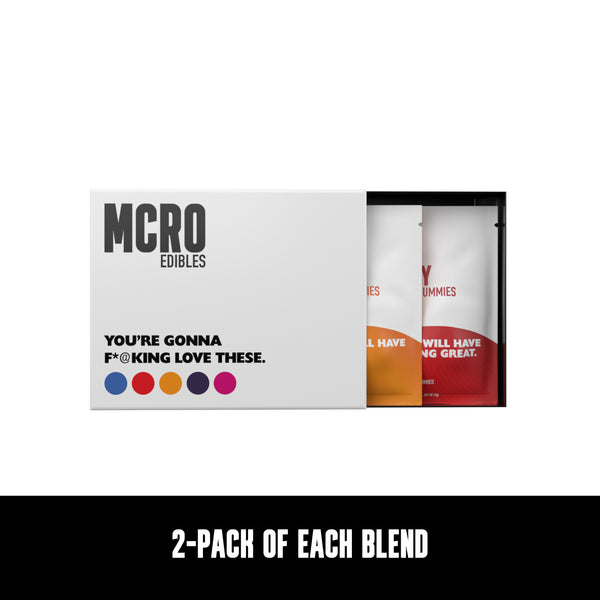
Curious about finding your starting point? The MCRO Sample Box lets you explore the full range of microdosed edibles so you can figure out what works best for you before committing to a full-size product.
Frequently Asked Questions About THC Drinks
What is a THC drink?
A THC drink is a beverage infused with tetrahydrocannabinol (THC), the psychoactive compound found in cannabis. THC drinks come in formats like seltzers, shots, teas, sodas, and drink enhancers, and they deliver a measured dose of THC in liquid form. Most THC beverages available today use hemp-derived Delta-9 THC that is federally legal under the 2018 Farm Bill.
How long does it take for a THC drink to kick in?
Most THC drinks produce noticeable effects within 10 to 30 minutes, depending on the formulation and your individual metabolism. Drinks made with nanoemulsified THC tend to work fastest, often within 10 to 15 minutes. This is significantly faster than traditional edibles, which typically take 45 to 90 minutes.
How is a THC drink different from an edible?
THC drinks are absorbed more quickly than solid edibles because a portion of the THC enters your bloodstream through the mucous membranes in your mouth and stomach rather than being processed entirely through the digestive system and liver. This results in faster onset (10 to 30 minutes vs. 45 to 90 minutes), shorter duration (1 to 3 hours vs. 4 to 6+ hours), and a generally lighter, more manageable experience.
How much THC is in a typical THC drink?
Most THC drinks contain between 2.5mg and 10mg of THC per serving. A 5mg dose is the most common standard serving and is considered a good starting point for most consumers. For newer users, starting with 2.5mg or half a serving and waiting 20 to 30 minutes before consuming more is recommended.
Are THC drinks legal?
Hemp-derived THC drinks containing no more than 0.3% Delta-9 THC by dry weight are federally legal in the United States under the 2018 Farm Bill. However, state laws vary significantly. Some states allow broad sale of hemp-derived THC products, while others have imposed restrictions. Always check the laws in your specific state before purchasing.
Can you mix a THC drink with alcohol?
Combining THC and alcohol is generally not recommended. Both substances affect your central nervous system, and mixing them can amplify impairment, reduce your ability to gauge your own intoxication level, and increase the likelihood of negative side effects like nausea or anxiety. If you're choosing a THC drink, treat it as a standalone experience.
What is microdosing THC, and how do drinks fit in?
Microdosing THC means consuming very small amounts of THC, typically 1 to 5mg, to achieve subtle therapeutic effects without significant psychoactive intensity. THC drinks are an excellent vehicle for microdosing because they offer precise dosing, fast onset, and a shorter duration that makes it easy to control the experience. If you're interested in exploring microdosing with functional ingredients like mushrooms and nootropics, MCRO's full product line is built specifically around this approach.
Will a THC drink show up on a drug test?
Yes. THC drinks contain real THC that is metabolized by your body in the same way as any other THC product. Regardless of the source (hemp-derived or marijuana-derived) or the delivery method, THC will produce metabolites that standard drug tests detect. If you are subject to drug testing, exercise caution.
FDA Disclosure: This product is not for use by or sale to persons under the age of 21. This product should be used only as directed on the label. It should not be used if you are pregnant or nursing. Consult with a physician before use, especially if you have a medical condition or use prescription medications. A doctor's advice should be sought before using any of these products. All trademarks and copyrights are property of their respective owners and are not affiliated with nor do they endorse this product. These statements have not been evaluated by the FDA. These products are not intended to diagnose, treat, cure or prevent any disease. By using this site you agree to follow the Privacy Policy and all Terms & Conditions printed on this site. Void Where Prohibited By Law.